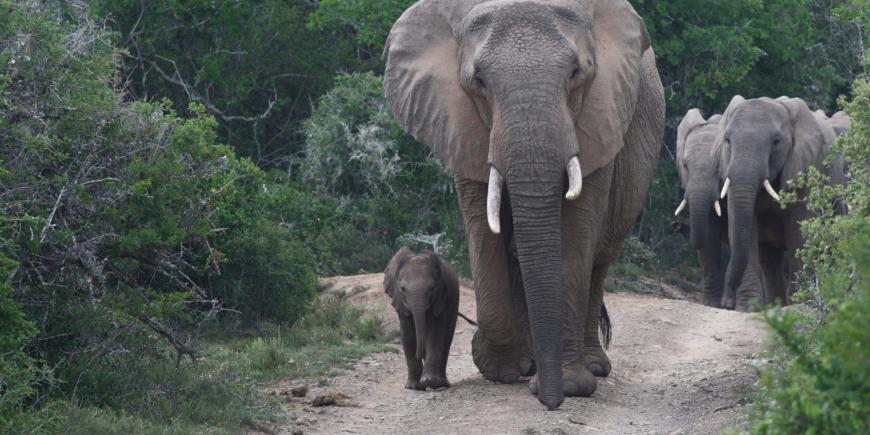
Why have we decided to list the world’s top volunteer projects for elephants? Because elephants are among the most intelligent and emotionally complex mammals on Earth. These gentle giants can weigh over 7,000kg, live for more than 70 years, and form tight-knit matriarchal family groups that resemble human social structures. They comfort one another, recognise themselves in mirrors (a sign of self-awareness), mourn lost relatives, and even display ritual behaviours that suggest a deep emotional life.
Yet despite their brilliance and cultural importance, both Asian and African elephants remain vulnerable or endangered. Poaching, habitat loss, human–elephant conflict and climate change continue to drive their decline. Protecting them is now a global conservation priority.
If you’re considering ethical elephant volunteering abroad, WorkingAbroad offers programmes that follow strict, welfare-focused guidelines, with no elephant riding, performances or harmful interactions. Below are seven of the best elephant conservation projects for 2026, spanning Namibia, South Africa, Sri Lanka, Cambodia,Thailand, India and Laos.
Set in the beautiful Chiang Mai province, this sanctuary provides a retirement haven for older elephants rescued from trekking, logging and tourism exploitation. Volunteers observe elephants roaming freely in forested landscapes, help prepare food and enrichment, and learn about the challenges facing elephants in modern Thailand.
You’ll also have the chance to engage with local communities, gaining insight into cultural perspectives and conservation issues unique to the region.
Based in Damaraland in north-west Namibia, this project offers the rare chance to track wild, desert-adapted elephants through dry riverbeds and rugged desert landscapes. Volunteers take part in monitoring and help build protective “water walls” around village wells, a vital way to reduce human–elephant conflict.
Camping under the stars and learning desert survival skills, you’ll reconnect with nature while directly supporting elephant conservation.
Located in remote Mondulkiri province, near the Vietnamese border, this sanctuary rescues elephants from logging and tourism industries. Volunteers support efforts to give elephants a peaceful, natural life after decades of work.
Alongside elephant care and monitoring, the project works hard to shift public attitudes in Cambodia, promoting a future where elephants are valued as wildlife rather than labour animals.
This well-respected Big Five game reserve in the Eastern Cape offers volunteers the chance to assist with elephant impact monitoring as part of broader conservation management. You’ll also track lions and rhinos, support anti-poaching teams, and help restore natural habitats.
For students, there is an option to gather research data for university projects, a fantastic opportunity to gain field experience in African wildlife conservation.
Volunteers join a conservation team working near Wasgamuwa National Park to address human–elephant conflict, a major threat to Asian elephants. Activities include elephant behaviour monitoring, community outreach and habitat restoration in villages that border the forest.
The field house overlooks the rural landscapes around Pussellayaya village, offering an immersive experience into Sri Lanka’s wildlife, culture and conservation challenges.
This ethical sanctuary in north-west Laos protects elephants recovering from hard labour in the logging and tourism industries. Here, elephants live peacefully in 530 hectares of protected forest, free to roam, forage and socialise.
Volunteers observe elephants in natural forest environments, support enrichment and help maintain the sanctuary, all within a low-impact, welfare-led conservation model.
Based at an ethical wildlife rescue centre, this project cares for elephants and sloth bears rescued from captivity, abuse or unsafe urban environments. Volunteers support daily animal care, enrichment, rehabilitation and conservation education initiatives.
The centre rescues injured wildlife nationwide and works tirelessly to rehabilitate animals for release wherever possible, making it one of the most impactful wildlife volunteer opportunities in India.
🐘 Fascinating Elephant Facts
While you’re deciding where to volunteer, here are a few surprising elephant facts:
Despite their size, elephants avoid certain trees because they fear the ants living on them — they don’t want ants crawling into their sensitive trunks.
Asian elephants never run; studies show they always keep at least two feet on the ground.
Elephants can get sunburned, so they cover themselves in sand and mud for protection.
Elephants have evolved a sixth toe, which turns from cartilage to bone as they age, helping support their immense weight.
Despite their size, elephants can be turned off by the smallest of critters. Scientists found that they avoid eating a type of acacia tree that is home to ants. Underfoot, ants can be crushed, but an elephant wants to avoid getting the ants inside its trunk, which is full of sensitive nerve endings.