The Comfiest Seats in the Research Station: Peru Week 10
January 7th 2024
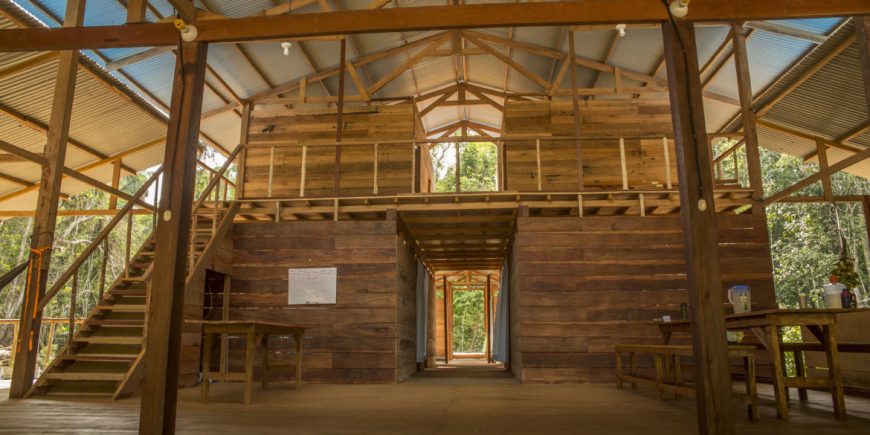
The comfiest seats in the research station are, without a doubt, the camp chairs at the staff platform. They offer just the right level of cushioning to sink into and make you never want to leave. However, Vicente, who seems to think he’s in charge of the chairs, feels that a seat in one of these chairs is a reward that must be earned. For the interns, anyway.
So it has turned into a bit of a running joke that we interns must first spot a snake to deserve a few minutes of peace in one of these heavenly chairs. This week, Maria spotted such a cool snake that it equated to her earning a night’s sleep in the chair if she so desired.
The Elusive Emerald Tree Boa
Whole expeditions take place with the sole mission of finding the emerald tree boa. These snakes are rarely spotted, which made it incredibly exciting for us to see one on a night walk!
I think Vicente is sometimes a little irritated at the pace Maria adopts on night walks. She is always lagging behind everyone else, scouring every inch of the forest for nocturnal creatures. So when she called out from behind us about seeing this snake, I’d take a guess that he was kicking himself for having walked past without noticing it. I know I was.
“Dylan’s going to be so mad that he didn’t see this snake,” Vicente commented. As we found it rather close to the research station, Maria sprinted back to get Dylan, the reptile expert here. A few minutes later, he was over in bare feet. As this species is non-venomous, Dylan picked up the snake. The snake kept eyeing Dylan up and flicking its tongue at him, trying to suss out whether he was food or not. “You’re allowed one love bite,” Dylan conceded to the snake in his arms.
Although there’s no danger from venom, this snake can still bite pretty hard. When a snake bites you, the biggest threat is actually to the snake itself. It’s important to try not to jerk your arm away if the snake bites because this can break the snake’s teeth, injuring it badly. Thankfully, this snake didn’t bite Dylan. I feel very lucky to have seen the emerald tree boa in the wild.
Night Walks always deliver Amazing Wildlife Encounters
We’ve been pretty lucky with the night walks this week. Aside from the emerald tree boa, we spotted lots of animals that I’d never seen before, including night monkeys, a kinkajou (same family as coatis and raccoons) and a Pacman frog (so named because of its characteristic round shape and large mouth).
We also spotted a blunt-headed tree snake, which we’d spotted once before. I was actually just thinking about asking if I could hold the snake because I knew it was non-venomous and wanted to learn how to handle snakes when Vicente asked if we wanted to hold it. It was like he had read my mind. Maria and I were both very keen.
Getting to grips with the Snakes, Literally
To hold the snake, you need to support both the front and back of its body, being careful not to have your hand too close to its face. It’s important to remain calm. If your heart rate goes up because you’re scared or excited, the snake can sense this and may try to bite you or escape. As the snake moved, I moved one hand in front of the other continuously so that it didn’t slither out of my hands. Its skin was so smooth. It’s important not to wear insect repellent when handling snakes because the chemicals are harmful and can be absorbed through their skin.
This week I also held a black-skinned parrot snake. It was a beautiful dark green colour with black-rimmed scales and bright yellow eyes. If you enlarged its head, I think it would look like a dragon. As I was holding the snake, I was reminded of the way someone had described snake handling to me a couple of years ago. You have to be “confident but gentle”. So that’s what I tried to be. I wasn’t scared at all. I was pleased to hear Dylan remark “You’re a natural,” as I handled the snake.
Research and Habitat Classifications
Aside from handling snakes, another new thing I did this week was starting the habitat classification for the small mammal grid that I described in my first couple of weeks here. This involved determining the characteristics of the habitat surrounding the points where the small mammal traps were set up. It included counting trees, measuring trees, measuring canopy density, estimating canopy height and a range of other measurements. This way, it can be investigated whether the kind of habitat affected what species were caught in the traps, or the abundance of individuals caught.
After successfully measuring a large tree, Vicente reeled the measuring tape back into its case, forgetting that the end of it was broken. Now we had no way of getting the end of the measuring tape back out of its case. After watching Vicente struggle for a couple of minutes, I asked him if my tweezers would help.
“You have tweezers with you?!” Maria exclaimed, clearly very surprised. “You always have everything with you,” she shook her head, speechless. She was referring to a number of other times when I’d been the knight in shining armour with my pen or knife, or something else that someone had forgotten. My tweezers are one of the many handy things on my Swiss army knife, and they saved the day. “And you judged me the time I said I had a bottle opener with me!”
Fire Ants!
On the way back from doing the habitat classification, suddenly lots of tiny bombs went off all over my arms. The words which came out of my mouth were not pretty. I almost always wear long sleeves doing fieldwork but this was one of the few days that I happened to be wearing a short-sleeved t-shirt. I looked down and saw that my arms were covered in ants. “Fire ants,” Vicente told me.
Fire ants have a mutualistic relationship with the trees that they live in. The trees provide the ants with shelter and in return, the ants defend the tree against herbivory. If something touches the tree, the fire ants rain down and attack. I must have brushed against one of the trees that they live on, and thinking that I was a threat to the tree, they stung me all over my arms. “That’s one thing I’ve been stung by that Maria hasn’t!” I joked.



 The Elusive Emerald Tree Boa
 Getting to grips with the Snakes, Literally
 After successfully measuring a large tree, Vicente reeled the measuring tape back into its case, forgetting that the end of it was broken. Now we had no way of getting the end of the measuring tape back out of its case. After watching Vicente struggle for a couple of minutes, I asked him if my tweezers would help.