Behind the Experience: Wolf and Lynx Monitoring in Slovakia
February 23rd 2025
Close to the northern border of the mountainous nation of Slovakia in Central Europe lies the region of Liptov. Bordered by mountains on all sides, the region is characterised by high peaks, green valleys, and forested slopes. The area is loved by tourists for its breathtaking scenery, cultural heritage and hiking and skiing opportunities. At the same time, local protected areas such as the Tatra National Park and the National Park of Nízke Tatry provide a haven for diverse wildlife that is intrinsic to Carpathian ecosystems.
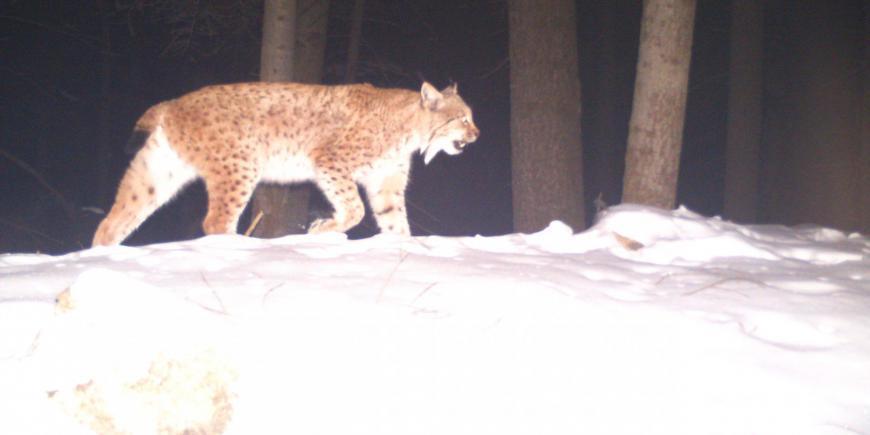
Among the residents of Slovakia’s mountain ecosystems are two very charismatic but often misunderstood species: the Eurasian wolf and the Eurasian lynx. As large predators, wolves and lynx are keystone species, meaning that their presence shapes the entire ecosystem and helps to maintain biodiversity and ecological balance.
The benefit of predators
Species like wolves and lynxes, in appropriate numbers, increase biodiversity in lots of indirect ways which are not obvious at a glance. Besides controlling populations of herbivores so that they don’t graze the land to its limit, predators keep prey species constantly moving through the ‘ecology of fear’. This gives vegetation time to recover from grazing and presents opportunities for a wider range of plant species to thrive (instead of only the toughest or fastest-recovering).
Predators are likely to hunt the slowest or weakest individuals first. This can prevent disease spreading in prey species since sick individuals may be hunted before they transmit a disease to the rest of the herd.
Wolves and lynxes also deter smaller predators such as foxes. Where there are fewer foxes, small mammals have a better chance of survival. They are not the first choice of prey for wolves or lynxes due to their small size. The large kills made by wolves and lynx also provide food for scavenging birds.
Maintaining biodiversity
Higher levels of biodiversity make an ecosystem more resilient to disturbances like disease, invasive species, and the impacts of climate change. This is because a greater diversity of species and greater genetic diversity within species means the ecosystem as a whole has a wider variety of adaptations. Certain adaptations can then protect certain individuals or species from the worst effects of any disturbance.
A landscape with a variety of habitats, like the mountains and valleys of northern Slovakia, can allow multiple large predator species to coexist. While lynxes are mostly solitary and prefer to hunt from the cover of trees and shrubs, wolves often work in groups and prefer open spaces. This means that conflict between the two species is reduced. They also continue to become more specialised for their particular habitat, giving rise to more genetic diversity.
The challenge of coexistence
Lynx and wolves can live in the same ecosystem without much trouble. Humans, however, have historically been much worse at sharing. Fear, sport, and revenge for livestock predation, are all reasons why predators have been hunted for hundreds of years, and even continue to be hunted today. Though environmental organizations are endeavouring to discover and promote effective and accessible strategies for human-wildlife coexistence, urban sprawl, human population growth, and the gradual recovery of certain endangered species means that human-wildlife interactions are more and more common.
In Slovakia, lynx have had legal protection since 2003, therefore hunting is them is prohibited. Meanwhile, wolves were finally given similar protection in 2021. However, poaching remains a threat to both of these animals. Even more concerning is a building trend throughout Europe of leaning towards downgrading protection for predator species. Support for removing hunting bans often stems from claims that predator numbers are too high or that livestock predation increases with hunting bans. However, these claims are not always backed by reliable evidence.
Volunteer impact
Misinformation poses a considerable threat to large predators like wolves and lynxes in Europe. Objective, dependable, and up-to-date data about predator populations is needed- by environmental governance bodies for informed decision-making and by environmental and conservation organisations to contest misinformed claims and campaign for co-existence.
The White Wilderness Project has been monitoring wolves and lynxes in the Liptov region since 2010. Their research has helped to shed light on discrepancies between population estimates stated by hunting organisations and those put forward by environmental groups. Monitoring continues to ensure an ongoing source of reliable data for the region.
Volunteers are an important part of this project, assisting with the collection of data across a large and remote study area with rough terrain. The project is a chance to experience the breath taking Carpathian mountains whilst learning about their ecology and taking part in field monitoring, which is critical for informing human- wildlife coexistence.



 The benefit of predators
 The challenge of coexistence
 Volunteer impact