In March, the quiet island of Naifaru in the Maldives came alive with the sounds of excited kids (and adults), curious questions, and the splash of fins in warm turquoise water. Our Maldives family volunteering programme hosted its largest group to date—six families, ten children, and a shared goal: to learn, help, and connect with the ocean.
This wasn’t your average holiday. It was a family volunteer trip to the Maldives—an immersive marine conservation experience designed for parents and children alike.
A hands-on introduction to marine conservation through Maldives family volunteering
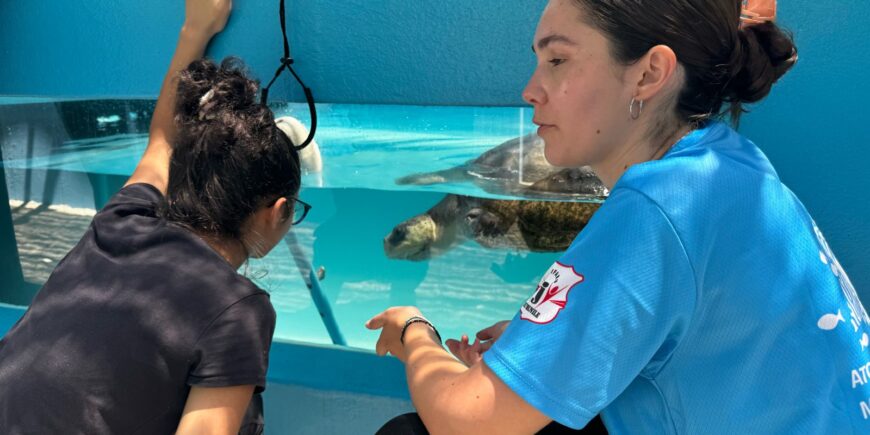
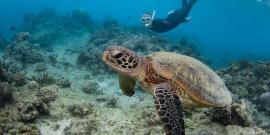
The families came to Naifaru to volunteer together and dive into the world of sea turtle rehabilitation and marine biology. Over seven days, they worked side by side with our marine team, feeding and caring for injured sea turtles, cleaning tanks, joining beach clean-ups, and learning about the threats facing ocean wildlife.
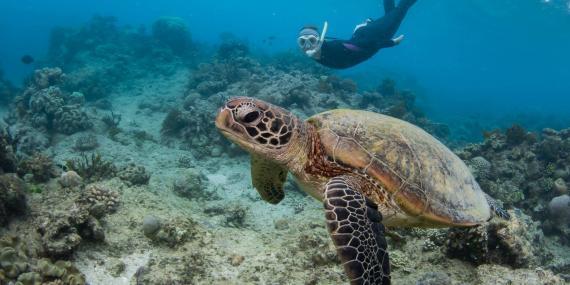
One of the first activities the children joined was a Captain Fanplastic storytelling session—introducing them to plastic pollution through an engaging and visual tale. From there, the learning deepened: a coral biology talk by Marine Team Lead Bennath, shark and ray biology bingo with Assistant Biologist Erin, and afternoon snorkelling sessions where children could spot the very species they’d been learning about.
“I never thought I’d see my 5-year-old pick up a piece of coral and explain its symbiotic relationship with zooxanthellae,” said one parent. “It’s something he’ll remember forever.”
Family tournament with a purpose
To keep things fun and competitive, the programme ran a Family Volunteers Ocean Tournament, assigning each family a sea turtle species name. Points were earned through creative and conservation-focused challenges.
The first event? A beach clean-up on Velaa Beach. The Hawksbill family led the pack, collecting 11.6kg of waste in under an hour. In total, over 30kg of marine debris was cleared.
Next came a treasure hunt—questions hidden around the island on ocean threats and biology, prompting families to race through sandy lanes in search of answers. The final challenge was an art project: turning trash into art. From plastic octopus murals to hatchlings crafted from discarded flip-flops, the creativity was impressive. The Leatherback team’s recycled octopus stole the win.
At the end of the week, every child received a Junior Marine Biologist certificate. There were hugs, cheers, and even a few tears as families said goodbye to a place that had clearly left a mark.
Life on the island
Families stayed at a locally run guesthouse, just a short walk from the marine centre. Greeted with coconuts and garlands, the children quickly made themselves at home. Volunteers and staff shared meals, stories, and laughs, and children drifted between learning, play, and meaningful tasks.
One mother shared how her daughter, previously obsessed with pop stars, had a change of heart.
“Taylor Swift is out, she now wants to be a marine biologist, inspired by Erin and the team.”
Why Maldives family volunteering matters
This family volunteering experience in the Maldives isn’t just about seeing turtles or picking up rubbish. It’s about connecting as a family through purpose, learning how ecosystems work, understanding our impact, and seeing how even small hands can make a difference.
For the children, this experience was not only a field trip—but a lesson in compassion, ecology, and resilience.
A Maldives family volunteering trip offers more than a getaway. It offers meaning.
You’ll swim with your kids in coral gardens, learn from real scientists, and leave knowing your family contributed to the recovery of marine wildlife in one of the world’s most stunning ecosystems.
If you’re looking for a hands-on volunteering trip with children, whether you homeschool or not, this is a chance to share something extraordinary.