Straight to the Point: Trimming Rhino Horn as an Anti-Poaching Intervention
October 11th 2025
Trimming rhino horn remains one of the most contentious anti-poaching strategies employed within wildlife conservation. It was first used in 1989 in Namibia but gained traction following the 2014 poaching crisis, when 1,215 rhinos were killed in South Africa alone; one rhino every eight hours. A study recently published in Science reported that dehorning rhinos led to a 78% reduction in poaching, but there is still debate around its long-term efficacy and ethical implications.
Other studies argue that forcefully removing a large portion of a rhino’s horn may disrupt behavioural patterns, particularly around territoriality, dominance and confrontation. While no increase in natural mortality or reduced reproductive rates have been confirmed, conservationists caution that trimming horns is not a panacea. Its success is contingent on comprehensive, integrated strategies that supplement existing rhino safeguarding efforts, such as robust security measures, law enforcement, community engagement and efforts to shift demand curves. But the law of unintended consequences exists within each of these interventions, further complicating the establishment of a single, sustainable solution to rhino poaching.
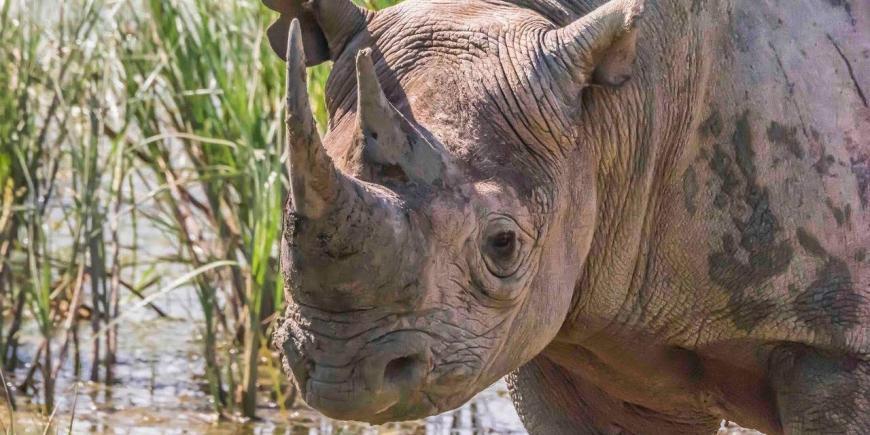
Trimming Rhino horn
The seven-year study set out to evaluate the impact of trimming rhino horn on poaching rates. Kuiper et al. followed 11 game reserves in the Kruger from 2017–23, comparing data from eight that implemented horn trimming with three that didn’t. Across that period, 1,985 rhinos were poached, despite around R1 billion (£55 million) being spent on conventional anti-poaching measures, including ranger patrols, aerial surveillance, fortified security and tracking dogs.
These efforts resulted in over 700 poacher arrests but yielded no statistical evidence for reducing poaching. However, the study also found that trimming the horns of 2,284 rhinos across eight game reserves reduced poaching by 78% for just 1.2% of the budget. While poaching was not eradicated in these reserves completely, the findings present a compelling case for trimming when considered in isolation. But the nuance of these results should not be understated.
Trimming horn benefits
Kuiper’s research demonstrates that trimming rhino horn diminishes poaching incentives. Poachers violently hack off rhino horn, often penetrating the skull and leaving them to an excruciating death. By pre-emptively removing the commodity at the centre of this illicit trade, poaching largely becomes a futile endeavour. Amputating the majority of the horn under controlled conditions involves sedating the animal, usually using blindfolds and ear protection to minimise sensory distress, and cutting it down with a chainsaw.
Rhino horn is made from keratin (like our fingernails), so removing it correctly is painless, particularly as experts leave the live core and growth plate intact. Rangers also use sedation as an opportunity to insert trackers and administer health checks to aid in further research and monitoring. There are extremely tight security measures around trimmed horns, with each one in South Africa being microchipped, secured in a vault and given a unique identification number to ensure it is not sold.
Trimming horn drawbacks
But, despite the positive correlation between trimming rhino horn and reducing poaching, it is not without issues. Dehorning rhino does not deter poachers completely. Many still target the animals for the residual inches of subcutaneous and supracutaneous stub left from the trimming process, which holds huge black-market value per gram. Poachers also kill dehorned rhino out of vengeance, to prove to rangers and conservationists that removing their prize will not deter their avarice, or to avoid inadvertently tracking that rhino again.
Despite the trimming process only taking only 10 minutes, it is logistically difficult and expensive, costing between R10,000 and R20,000 (~£420–840) each time. This reflects cumulative costs of aerial tracking (often using a helicopter), sedation, anaesthesia, reversal agents, veterinary oversight and post-trim horn care. Trimming is a recurring intervention and must be done every 12–24 months to manage regrowth. This amplifies long-term costs, especially when combined with other anti-poaching strategies, all of which incur their own costs.
Anaesthesia in animals always carries inherent risk, and this is particularly true when handling animals that can grow up to 2,400 kg (male white rhino) and for pregnant females. Some rhino may also evade sedation by retreating to inaccessible terrain, or suffer injuries during aerial herding. Furthermore, while dehorning may offer localised protection, it risks merely displacing poachers to reserves where horn trimming is less established.
Altering the Societal Dynamics of Rhinos
Perhaps one of the most prolific illustrations of the law of unintended consequences lies in the implication that horn trimming may fundamentally alter the social dynamics of rhino populations. One notable study published in 2023 identified a positive correlation between horn size, territorial range and reproductive success in black rhino. Males with larger horns were found to dominate 65% of male/male interactions, using their horns as both a weapon and a source of intimidation. After examining data from 24,760 rhino sightings over 15 years across 10 South African game reserves, the study found that horn-trimmed rhino decreased their home-range area by 45.5% (12 km²) and were 37% less likely to engage in social interactions.
Black rhino are solitary creatures, but their home ranges overlap intersexually, are crucial for maintaining social interaction and allow them to use scent to identify other rhino, inform competitive interactions, distinguish boundaries and find mates. A rhino’s horn is a vital tool for asserting dominance, defending or expanding territory and signalling reproductive viability. By removing their primary form for self-defence and social assertion, horn trimming may inadvertently subject rhino to behavioural maladaptation through anthropogenic disturbance, risking altering spatial ecology, dominance hierarchies and reproductive patterns, and impacting the demographic stability and long-term sustainability of rhino populations.
Other anti-poaching strategies
There are various other conservation strategies employed to protect rhino from the poaching crisis driven by transnational organised crime syndicates. These include tackling systemic factors of poverty and corruption, shifting the demand curve, legalising and regulating trade, heightened surveillance capacity and conservation translocation. But every potential solution seems to be accompanied by a caveat negating its suitability for broader implementation.
Systemic issues: Poverty, deep-rooted corruption and illegal trade
Poverty and corruption are the primary driving factors of the poaching crisis. For those living in extreme poverty, the prospect of earning a substantial income through illicit wildlife trafficking, directly or indirectly, can outweigh the risks of arrest or prosecution. Organised crime syndicates exploit these socio-economic vulnerabilities, often recruiting from marginalised communities while shielding higher-level operatives within the network. When compounded by systemic corruption within law enforcement, game reserves and judicial systems, these networks are able to operate with relative impunity.
This, combined with its perception as a social symbol, means the majority of demand for rhino horn comes from Asia’s elite. Directing resources to educate these consumers about the horns’ lack of medicinal credibility and the ethical and existential costs involved may deter them from buying it on the black market to display at their next dinner party. However, previous efforts to educate have proven relatively fruitless thus far.
That said, many consumers are unaware that the ancient medicines they purchase contain rhino horn at all and, when the US analysed some of the medicines believed to treat various ailments, they found them laced with other drugs such as Viagra and paracetamol, explaining their effectiveness.
Rhino Corruption
Julian Rademeyer, author of Landscape of fear: Crime, corruption and murder in greater Kruger, argues that internal corruption poses a greater threat to rhino in the Kruger than poaching itself. Corruption is deeply entrenched within the Kruger’s operational framework, with some South African National Parks officials speculating that as many as 70% of its law-enforcement staff are complicit in criminal activity to some extent, aiding poaching networks and fuelling crime syndicates.
When those entrusted with the protection of rhino are instead helping to guarantee their demise for their own rapacity, the foundational trust required for effective anti-poaching efforts is fundamentally dismantled. This corruption represents not only a breakdown in institutional integrity but also an intrinsic lack of value for rhino or conservation efforts, reinforcing the need for sustained investment in community-based education and for addressing the existing social tolerance of wildlife crime.
Should trade be legalised?
The question of legalising the international trade of rhino horn is divisive but, for wildlife conservationists, it’s the only way to reduce poaching. Some argue that legalising rhino horn trade would only exacerbate the poaching crisis. A legal market might stimulate demand among both new and existing consumers, as those previously deterred by its illegality may become involved. The coexistence of legal and illegal markets may also encourage competition and complicate enforcement, creating opportunities for laundering illicit horn under the guise of legality and overwhelming already-limited regulatory capacities.
Legalising the trade of rhino horn could also introduce the ethical risk of domesticating rhino, encouraging commercial farming and breeding for horn production. This practice risks undermining the intrinsic value of wild animals and threatens to dismantle the conservation ethic that prioritises protection over exploitation. Furthermore, legalisation may inadvertently incentivise poaching, as criminals seek to capitalise on obtaining and selling horn with reduced fear of prosecution in a more permissive trade environment, and one in which they ensure supply keeps up with demand.
Illegal Trade Issues
International trade of rhino horn was banned in 1977 and domestic trade in 2008. But overall population rates have not increased since the ban, with the 2014 poaching crisis serving as the cataclysm. Lifting its illegality and creating a regulated, legal market would undercut illicit trade by introducing traceable, ethically sourced horn from non-lethal harvesting. Rhino would be worth more alive than dead as their horns could be given the chance to regrow, and poverty may be alleviated as communities could breed rhino for regular horn sales.
If the financial benefits of rhino horn were embraced, rhino ownership and management would shift from being perceived as an economic liability, given the significant security and safety costs, to a viable source of revenue. Proceeds from selling the horn could then be reinvested into conservation efforts, education and growing rhino populations.
Fundamentally, the status symbol associated with buying and owning rhino horn would drop if trade were legalised, curbing demand and, consequently, supply.
Tackling these systemic issues on a transnational scale is an immensely challenging endeavour. Not only would it require alleviating poverty and its consequentially diminished regard for risk, but it would also require confronting deeply entrenched cultural beliefs within affluent, often complicit consumer societies, as well as navigating the contentious and politically charged debates surrounding the legalisation or illegalisation of rhino horn trade and the impenetrable networks of crime syndicates that warrant them. The intersection of socio-economic inequality, cultural tradition, organised crime and transnational cooperation renders the path towards a unified, sustainable solution an exceedingly complex one.
Increased security and surveillance
Enhanced security and increased surveillance offer another layer of protection for rhino, deterring poachers by elevating the risk of detection. But these measures may inadvertently prompt poachers to study and adapt to patrol routines and surveillance patterns, particularly in areas with predictable security operations. Game reserves also span vast areas, so finding and funding the resources to accommodate this (through ranger patrols, aerial surveillance, tracker dogs, remote cameras, physical barriers) is not a straight-forward task.
Conservation translocation
Conservation translocation is another anti-poaching technique that moves animals to a new, lower-risk area. This can be a great way to complicate poachers’ ability to track the animals but also has numerous drawbacks. It forces rhino out of their established territories, disrupting the home ranges they have created and the social dynamics that exist within them. It’s also very expensive and logistically challenging to sedate and transport such huge animals and introduces risk of injury, particularly to the rhinos’ horns in transit. Translocation may also encourage poachers to expand their geographical remits and criminal networks, exposing rhino to the same threats of poaching in new areas.
The final point
It is evident that no single solution exists to eradicate rhino poaching, though the most hope lies in legalising trade. Each intervention has inherent limitations relating to cost, resources, logistics, safety, ecological disruption, social fabric and long-term effectiveness. No conservationist claims that horn trimming alone will resolve the poaching crisis. They seek only to illustrate that, when used in conjunction with other anti-poaching methods, it has compelling benefits. Seeking a strategic shift away from focusing only on punitive deterrence, through longer sentences and harsher penalties, is critical.
Kuiper et al.’s investigation into the impact of dehorning as an anti-poaching strategy underscores a broader conservation principle. This is that while interventions that directly reduce the value of rhino to poachers are vital, they must be supplemented by efforts to address underlying systemic drivers. Dehorned rhino remain vulnerable as long as residual horn retains market value and demand persists. As such, lasting impact can only be achieved through a holistic framework that includes poverty alleviation, dismantling organised crime networks, campaigns to reduce demand, international legal cooperation, legalising trade and community-based education.
Ultimately, while dehorning and other anti-poaching inventions can be effective in reducing supply and demand of rhino horn, due diligence must be thorough to identify, accommodate and minimise the negative effects of the law of unintended consequences. The complexity and relentlessness of the poaching crisis demands unity, innovation and sustained global commitment if rhino are to keep clinging to their existence.
Check out these three WorkingAbroad projects that work with rhino:



 Trimming Rhino horn
 Trimming horn drawbacks
 Systemic issues: Poverty, deep-rooted corruption and illegal trade
 Should trade be legalised?
 Conservation translocation