
About the Sea Search Project
The Sea Search Research and Conservation group is a collective of professional scientists and students with a strong academic background. Their primary focus is the production of peer-reviewed scientific research and student training. They also provide specialist consultancy services and work with industry and the government to promote conservation through effective management. Sea Search conducts research on whales, dolphins and seals in southern Africa with a focus on conservation ecology and bioacoustics.
In addition to ongoing building and processing of existing long-term data sets, our research over the next year will be focussing on the following projects:
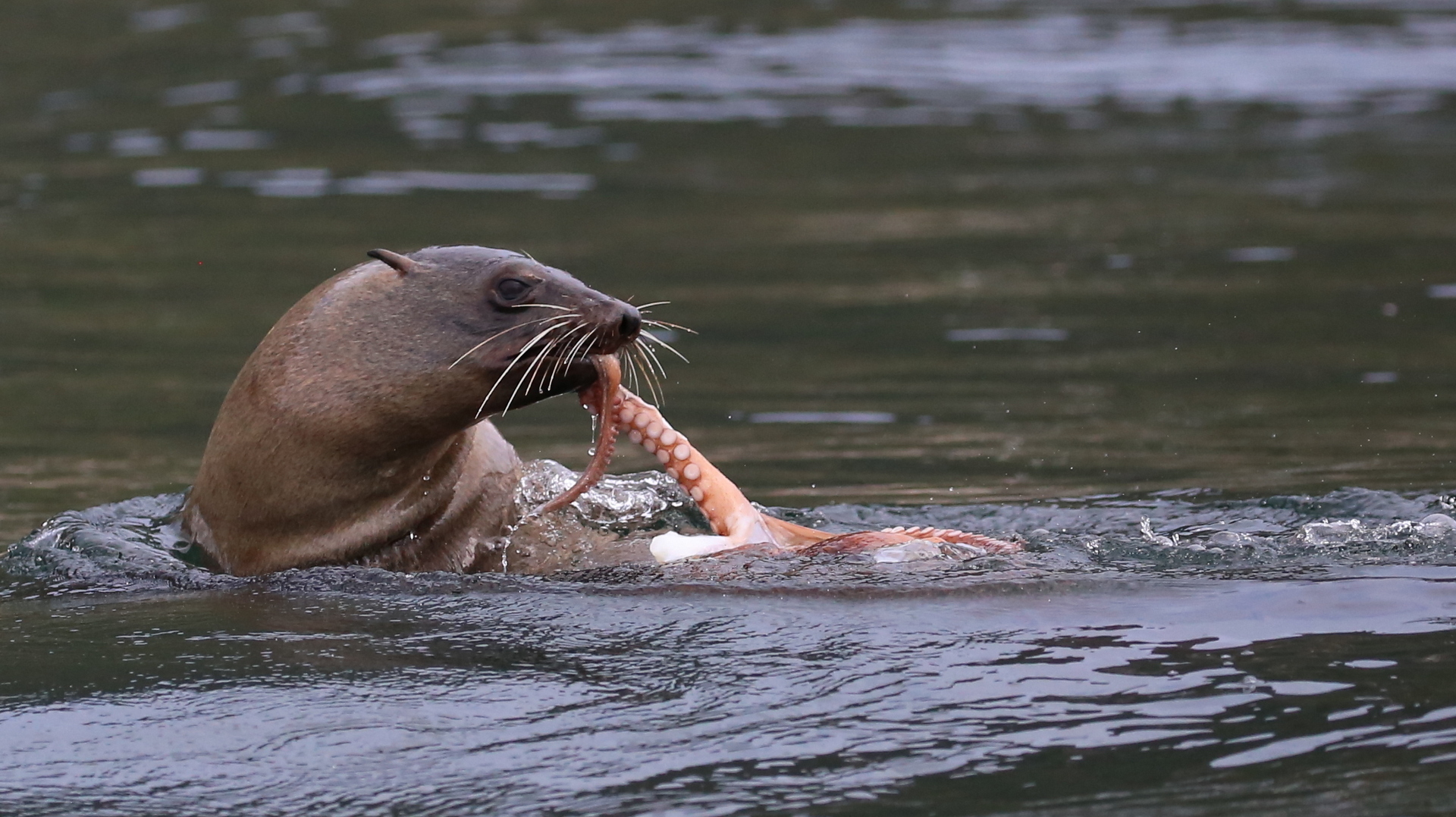
Southern African Cape fur seal monitoring
Since 2021, Sea Search has been the leading scientific group working on identifying and monitoring mass die-offs of Cape fur seals (Arctocephalus pusillus pusillus) around South Africa. Working with multiple stakeholders, Sea Search conducts regular coastal mortality surveys and necropsies to monitor these events and the health of the population.
Through biological sampling of seals we aim to understand why these mass die-offs have occurred and gain insight into the potential threats to Cape fur seals along our coastline, as well as the coastal ecosystem as a whole. Additionally, Sea Search also conducts photographic, boat-based surveys around seal colonies along the West Coast to monitor seal entanglement in the population.
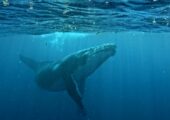
 Acoustic Communication in Feeding Humpback whales
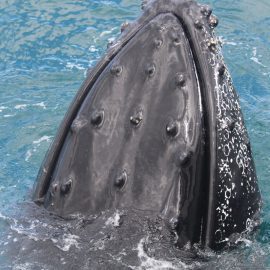
Southern hemisphere humpback whales (Megaptera novaeangliae) migrate from warm tropical waters where they breed, along the coasts of southern Africa, to feed in the Southern Ocean during summer. Thanks to the cold nutrient rich waters of the Benguela Upwelling ecosystem, many of these whales stop to feed off the west coast of South Africa – often forming globally unique ‘supergroups’ of 100s of animals! This incredible spectacle is a growing tourist attraction, but also gives us the unique opportunity to study feeding southern hemisphere humpback whales outside the Antarctic.
Our work on these animals aims to bring new insights into this subpopulation of humpback whales feeding along the west coast of southern Africa using photographic and acoustic data. Photographic identification of individual whales is fed into the collaborative citizen science platform “Happywhale” which has already identified multiple links to other neighbouring populations and information on residency and numbers.
Our research on whale vocal behaviour takes place using acoustic animal borne tags, long-term recorders and boat deployed hydrophones providing multiple perspectives for investigating acoustic signalling during feeding and group coordination.
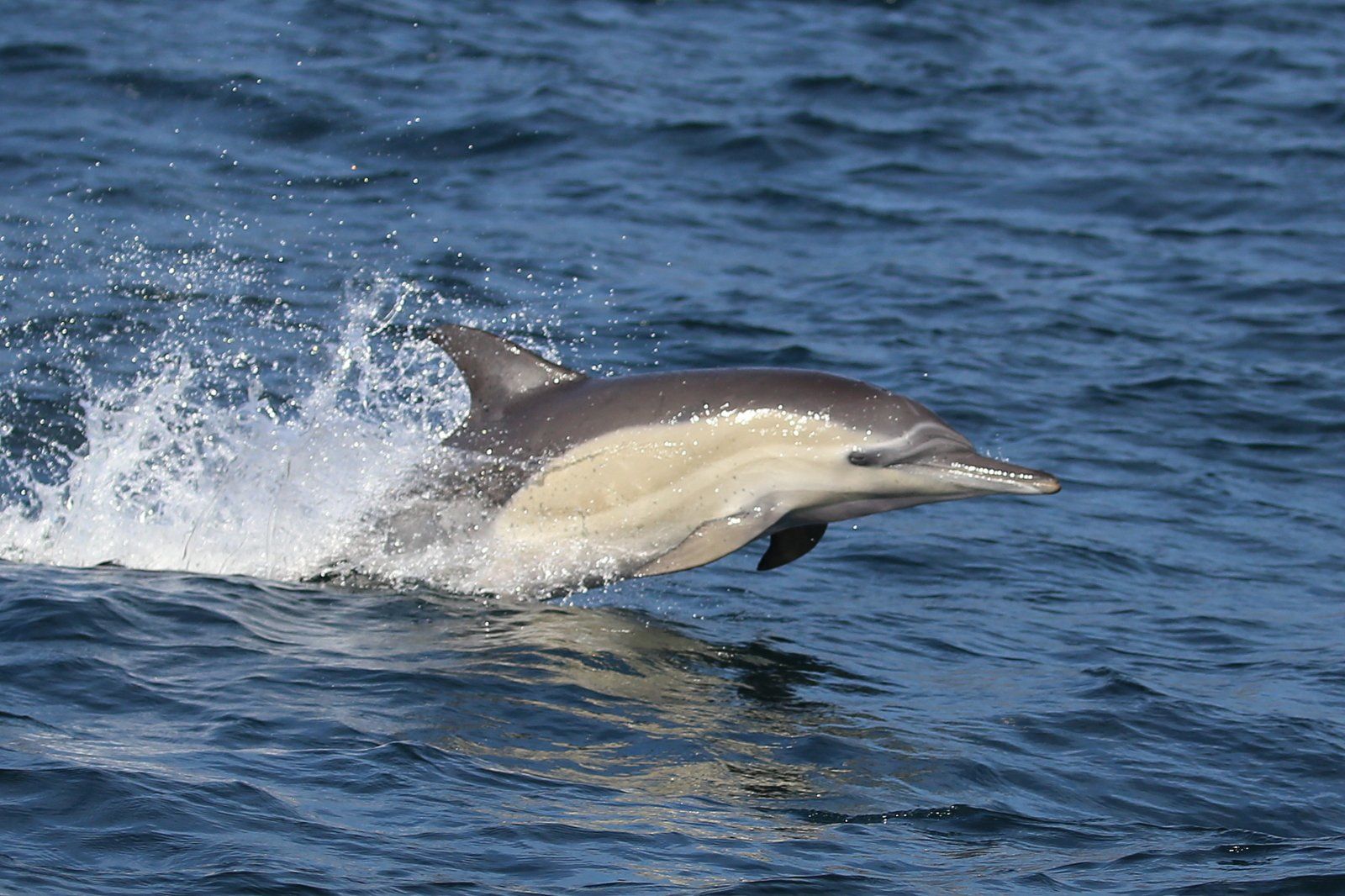
Coastal dolphin surveys
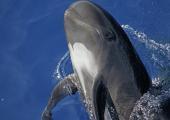
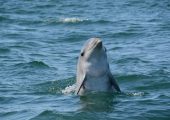
The west coast of South Africa is home to various coastal cetaceans, including three dolphin species, common dolphins (Delphinus delphis), dusky dolphins (Lagenorhynchus obscurus) and Heaviside’s dolphins (Cephalorhynchus heavisidii). Through land-based surveys, theodolite tracking, and coastal boat-based surveys, we are conducting long-term monitoring of habitat use and pod dynamics to understand the movement and characteristics of these different species. A special focus will be given to the monitoring of a known Heaviside’s dolphin population inhabiting Saldanha Bay waters through photo-identification and passive acoustic monitoring.
“Sea Search is one of the leading marine mammal research and education groups in southern Africa and conducts research on a wide range of species and topics in the region’’ – Project Director
The Marine Mammal Research Field Course
With decades of research experience under their belt, Sea Search Directors (Dr Simon Elwen and Dr Tess Gridley) together with Expert Instructors (Dr Rachel Probert and Dr Sasha Dines) have devised a focused, hands-on, and intensive field skills course for those wanting to experience marine mammal research and gain crucial research skills in a concentrated two-week time frame.
The Marine Mammal Research Field Course combines practical and theoretical approaches. Students will gain experience and skills to design and conduct surveys for cetaceans, from line-transect designs to those with photographic identification and acoustic data collection as the goal. Additionally we will cover stranding response, from surveys and safety to data considerations and one or more guided necropsies of fur seals. Necropsy work will introduce students to the fundamentals of biological sampling of marine mammals. Regular training sessions will provide introductions to data handling, analysis, and storage, as well as key academic skills such as project design and scientific report writing.
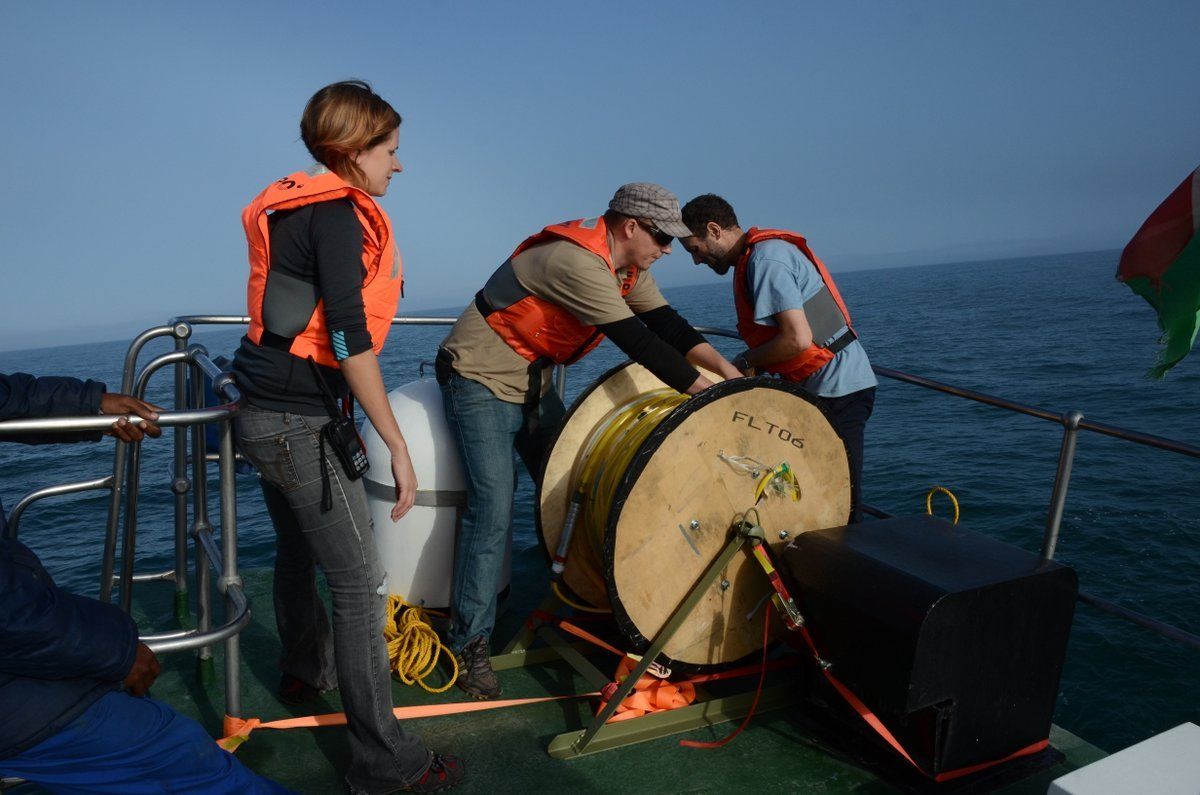 Typical activities/topics students will gain experience in:
- Practical field skills 1: Boat skills
- Practical field skills 2: Survey design and data collection
- Practical field skills 3: Passive acoustic monitoring (multiple tools)
- Practical field skills 4: Photographic identification & camera skills
- Marine mammal biology, evolution, and conservation
- Marine mammal biology and health
- Behavioural acoustics and acoustic analysis
- Photographic mark-recapture, processing and analysis
- Machine learning and AI for science
- Scientific writing and science communication
Fieldwork will include:
Boat and field surveys (3 to 4 days per week), photographic identification, behavioural acoustics, biopsy collection, shore-based tracking, strandings and necropsies
Classroom tasks will include:
Data management and acoustic and photographic data processing and analysis.