
About the Statia Conservation Project
Volunteer in the Dutch Caribbean on the tiny island of St. Eustatius. You will join the St. Eustatius National Parks Foundation to help protect, maintain, and conserve their parks at land and sea.
The main goal is to maintain the parks, but also to monitor the species within the parks and there are some research projects as well. At the project the team believe it is important to emphasise the interconnectivity between environments; for example, the reforestation project that is focused on terrestrial and coastal environments will mitigate the impact of erosion and run-off, which directly affects the reefs surrounding our island.
This means that all volunteers will help across both marine and terrestrial departments as required. Any activities that require diving will only be undertaken by volunteers with PADI Advanced Open Water certification (or equivalent).
You will work 5 days a week. A typical working day starts at 7 am till 3:30 pm, with a 30 minute lunch break. Because it can get hot towards the middle of the day, the mornings in the terrestrial parks are often designated for trail maintenance or monitoring, in the botanical garden or ‘ReforeStatia’ for fencing, or planting trees.
In the marine park, only the mornings are designated for diving. In the afternoons you might be working on data input or analysis, helping other interns and volunteers with projects, or working on other land-based projects.
You will have the opportunity to do various conservation volunteer projects across the parks, as listed below.
National Parks trails and biodiversity
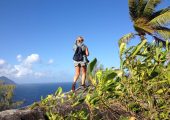
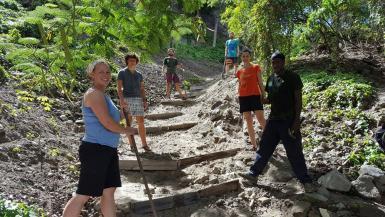
Volunteers may spend a few days a week working on the trail systems in the Quill and Boven National Park. We have a combined total of 17 trails. Regular maintenance of these trails is required to ensure visitors’ safety and enjoyment of the park. Volunteer tasks include:
- Creation and improvement of trails
- Clearance of the paths
- improvement of signage
- Assist with erosion control
- Map trails using GPS
- Monitor of species and habitats
- Carry equipment to specific points on the trails for use in maintenance activities
- Accompany educational hikes with various youth groups
- Assist with regular iguana surveys and tagging
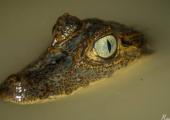
We also do conservation work, including biodiversity monitoring projects throughout the year. These include monitoring of red-billed tropicbirds, bridled quail-dove, red-bellied racer, and Lesser Antillean iguana. There is currently an invasion of the Green Iguana onto the island, and currently preventing this from further threatening the survival of the native Lesser Antillean iguana.
It is important that you are a competent hiker, fit and healthy. A number of our trails are steep and can be slippery.
Land restoration
Our land restoration efforts are aimed at protecting and enhancing the natural environment of the Quill. There is a particular emphasis on preserving native vegetation and creating safe zones for endemic and threatened species. This is critical work to safeguard one of the most ecologically valuable sites on the island, ensuring a future for the island’s rarest and iconic species.
Volunteers can take part in habitat assessment, data collection, biodiversity surveys, and population censuses of key species. You will also assist in the creation of protected zones, through the installation of fencing, to reduce disturbance from roaming livestock and to prevent further habitat degradation. You might also help produce information material for the general public and schools, and support social events to promote the Quill restoration efforts.
Botanical Garden
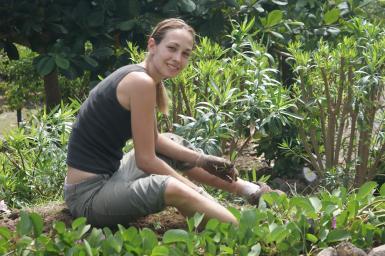
The Botanical Garden has been badly affected by hurricanes throughout the years. Although it remains a very peaceful and scenic area of the island, with help from our volunteers we aim to continue developing this site to focus on preservation, conservation, education, and recreation.
Volunteers help with a range of tasks related to garden maintenance, including:
- Raking, weeding, pruning, weed whacking,
- Maintain composting and mulching systems
- Irrigation of plants, carpentry, painting.
- Assisting with building fences and work in the shade house
- Develop plans for regenerating the garden and increase diversity of plants
- Develop sustainable ways of pest control
- Develop ways for replanting and structuring of arbors and specific areas
Reforestation – ReforeStatia
ReforeStatia is a large-scale reforestation project on the island. It was initiated to replace the trees that were felled by Hurricane Irma and Maria. The goals also include the reduction of erosion around the island. There are several sites dedicated to producing and growing new plants. The out-planting of trees has begun in at least 3 locations around the island.
Our aim is to restore important ecosystems and to contribute to the island’s sustainable agriculture goals. You will support by working in the plant nursery, assisting fencing efforts, maintaining the food garden, and planting and caring for new trees in different areas.
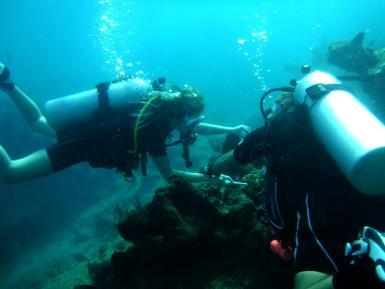 Marine Park
The St Eustatius Marine Park surrounds the entire island; it reaches from the high tide line to the 30-meter depth contour. Within the park, there are two reserves that are designated as no fishing or anchoring zones. The team maintains about 30 sites, and conduct research and monitoring.
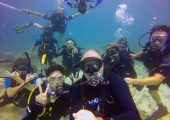
Volunteers help the rangers with tasks in the Marine Park. The main task of the marine park is maintenance of the mooring lines,
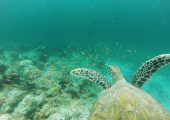
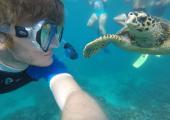
but species and ecosystem monitoring (turtle, fish, urchin, coral, and seagrass surveys), invasive species control (lionfish), and other projects are also part of the work within the park.
Dive time can range between 5 and 100 minutes, depending on the tasks, but we always stay within the limits of our computers.
Most of this work is done underwater, which is why it is required to have your Advanced Open Water diving certificate (and valid Sport Silver DAN insurance). If you don’t have this and don’t want to get it in your time there, there are still opportunities to be trained as a captain, learn how to maintain mooring lines (knotting and splicing), or help in projects that do not include diving.
Sea Turtle Monitoring
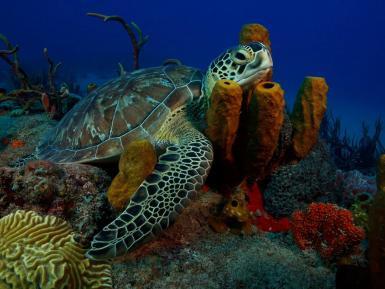
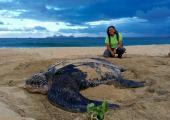
On the beaches of St Eustatius, there are three species of sea turtles that nest: the green turtle (Chelonia mydas), hawksbill turtle (Eretmochelys imbricata), and occasionally the leatherback turtle (Dermochelys coriacea).
You will assist with morning or night patrols, nest excavations, beach clean-ups, data collection and entry, education, training of volunteers, beach mapping, scheduling and other activities, as needed.
- Hawksbill nesting season peaks generally around July and August, but their activities can be found all throughout the year.
- The leatherback activities are between April and June, although they rarely come to the island anymore. Only every few years a leatherback activity is recorded.
- The green turtle is the most common species nesting on the island. Nesting activities peak in August and September.
During the peak of the hawksbill but mainly the green season, night patrols might take place as well where there is a possibility to see the turtles nesting. Please note that our nesting population of turtles is small. We therefore do not patrol the beach every night throughout the season, and it is rare to see a turtle during the night patrols. Patrols sometimes take place in inclement weather and are only cancelled if there is a thunderstorm present.
Patrols in general take place between 8pm till 2am, but it can take longer if a turtle has been sighted. During patrols, the beach is walked multiple times, but short breaks are taken in between. Zeelandia beach is the beach where the night patrols take place. It is about 1.4 km long, so we expect our volunteers to be competent hikers, fit, and healthy.
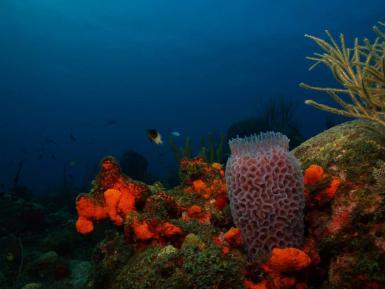
Coral Reef Restoration
The hard coral coverage on our reefs has decreased from 25% coverage 20 years ago to less than a 1% today. This project focuses on herbivore restoration. Without herbivores on the reefs, macroalgae will dominate the reef, competing directly with existing colonies leaving little space for recruits to settle.
Volunteers take part in data collection, help monitor the land-based nursery at our marine lab, and reef restoration fieldwork. You might help with culturing Diadema sea urchin, assist with lab operations and Sea urchin out-planting, or monitoring outplanting site.
It is required to have your Advanced Open Water diving certificate, if you want to do underwater fieldwork activities.
Education & Outreach
The programme works with after school clubs on the island, which allows us to facilitate the Junior Rangers programme. This program enables children between ages 8-12 to experience the outdoors and learn about nature. During the summer months, a week-long summer club is organised.
Throughout the year there are many different outreach activities that we do, to encourage awareness in the local community. Volunteers will be developing content and materials (blogs, social media posts, newsletters, lesson plans) geared towards educating the public of St Eustatius on nature, its ecosystem services, and their role as a community in protecting it.
The activities include face-to-face opportunities, mostly with children, sometimes adults and the elderly. Other activities to support with can be organising public beach cleanups, hikes, snorkel clubs, or events to raise more awareness.
Orientation and Free Time
During the first week of your stay, you will receive orientation and training. Be mentally prepared to enter the field immediately (potentially diving in the case of the diving volunteers) if your assistance is required. Otherwise, your first hours will involve information sharing about the project and its operations, information about living arrangements, reading into protocols and training. The staff will ensure that you are fully orientated on all equipment and understand the tasks at hand.
During your free time, you also have the opportunity to get SCUBA certified (at your own cost), or you can spend it relaxing, diving, snorkelling, swimming down at the pier, obtaining diving certificates, bird watching, and enjoying the peace of Statia!
Project Background
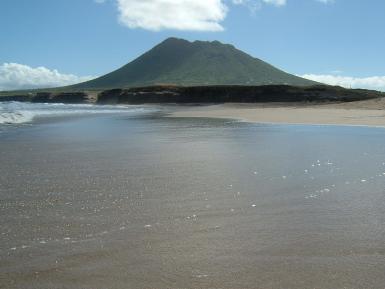 The Quill, a 600-metre dormant volcano that dominates the landscape of the island of St. Eustatius, is home to many unusual and endangered species of plants and animals. The Quill National Park was pronounced the first official National Park of the Dutch Caribbean in 1998. It is characterised by eight different vegetation zones, six of which are found on the crater rim and basin, including the Elfin Forest, the dry evergreen forest, and evergreen bushland, each of which contains rich flora.
The crater basin is dominated by giant Kapok and Sandbox trees, as well as mango, wild papaya, and mamee apple which share the canopy with endangered tree species, including Redwood Birds Cherry.
Eighteen species of orchid are found in the Quill and on the Northern hills. In addition, many species of birds, some of them threatened, live in the Quill, including tropicbirds and hummingbirds. Several species of reptiles, which are already extinct on other Caribbean islands can be found, including the red-bellied racer snake and Antillean iguana.
The St Eustatius National Marine Park is defined as the waters surrounding Statia from the high tide line to the 30m (100ft) depth contour. Within the park, there are two reserves, which are no fishing and anchoring zones. It was designated the Statia Marine Park in 1996 through the St. Eustatius Marine Environment Ordinance, with the objective to preserve and manage Statia’s marine resources for the benefit and enjoyment of the people and future generations.
An ethic of environmental conservation has yet to take hold on Statia, you can help with the progress that is being made. Providing access to the island’s natural attractions, especially to the young, aids in the development of ecological consciousness on which the lasting survival of the Sint Eustatius National Parks ultimately depends.
Sea Turtle Conservation Volunteer Programme
The sea turtle conservation programme has now been running for over 25 years. Monitoring patrols for nesting turtles on Zeelandia Beach started in 2002 and increased with a greater number of patrols due to the onset of the WorkingAbroad Volunteer programme. It was with great excitement that the first leatherback turtle was observed nesting on 17th April 2003, and a number of additional leatherbacks nested on Zeelandia during the year.
Today, the Sea Turtle Volunteer Programme Co-ordinator along with the Project Intern coordinates the monitoring patrols during the nesting season. Volunteers are expected to take part in these patrols when they are scheduled. Volunteers should also expect that many nights the beach will be patrolled without a sighting of a nesting female. Our presence on the beach should actually be seen as safeguarding. Our role is the protection of the eggs until the hatchlings make it safely to the surf. Volunteers make the sea turtle programme possible as the programme does not have the amount of staff in order to carry out the necessary patrols.