
Useful Information about Carriacou – Isle of Reefs
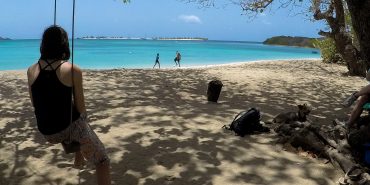
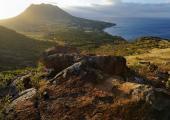
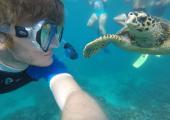
Carriacou is the sister isle of Grenada. Just 13 square miles in size, Carriacou is surrounded by beautiful beaches of white, golden and volcanic black sands. Coral reefs surround the island, providing a base for our beautiful sandy beaches – Carriacou is perfect for beach walks, snorkelling and sun bathing.
Climate
The island is classed as ‘Sub-Tropical’ which means it’s typically warm and sunny all year round. Air temperatures range from 23°C (73°F) during winter to 33°C (91°F) in the summer. The sun can get very hot, so make sure you bring plenty of reef safe protection and a hat.
Culture and Language
Carriacou is a largely undeveloped island from a tourism and industry perspective and represents one of the last truly authentic Caribbean islands, you will meet warm and genuinely friendly people who are simply pleased to see you! We are sure you will fall in love with the island, the culture and the people. The language spoken here is English, but spoken very rapidly and with a strong Kayak accent. Be patient and you will pick up what people are saying to you.
Power & Communications
Power on the island is typically 220v delivered through a UK style 3-pin plug. Adapters from European and US plugs are available in most supermarkets. If your devise is specifically 110v US, then do not plug it in without a transformer. We have 2 cell phone companies on the island, and SIM cards are available fairly inexpensively. However free WiFi is widely available in Hillsborough, so communications with home should be easy.
Life as a Reef Buddy Volunteer in the Caribbean!
Who are we, what we do and why we do it. Watch this short video to learn more about Caribbean Reef Buddy and why the beautiful island of Carriacou is so close to our hearts.
Here is a brief introduction to our various projects:
Coral Reef Surveys
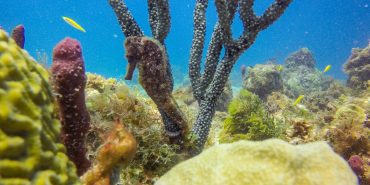
The coral reef systems around Carriacou comprise of a beautifully special and biodiverse coral reef ecosystem on which the population of this island relies. Though still teeming with life, increasing stress due to over-fishing and invasive species could ultimately threaten their collapse! Through reef monitoring and data collection, a better picture can be obtained concerning stressors to the reef ecosystem and strategies by which they can be mitigated. We work together with universities and individual researchers around the globe that share our goals to protect this beautiful and productive ecosystem. You will be trained in the Reef Check monitoring protocols and conduct surveys covering fish, benthic and coral.
Coral Reef Regeneration
As part of a network of more than 2,000 diving operations and NGO’s globally, Caribbean Reef Buddy participates in a programme aimed at using coral nurseries to artificially aid the repopulation of our coral reefs. Through this network, tens of thousands of new corals are planted onto the reefs each year. Our Caribbean Coral Nursery project was written and designed to teach Caribbean Reef Buddy volunteers about the construction, population, maintenance, monitoring and out-planting of a coral nursery using Staghorn (Acropora cervicornis) and Elkhorn (Acropora palmata) coral species. Unfortunately, lately we’ve been seeing a few species of corals being destroyed by Stony Coral Tissue Loss Disease (SCTLD). As a result, we’re looking to expand our coral nursery to include other species such as: Pillar (Dendrogyra cylindrus), Grooved and Symetrical brain (Diploria labyrinthiformis, Psuedodiploria strigose) and Great star (Montastraea cavernosa) coral species as well as pillar coral (Porites porites).
Predator Week
This project combines two programs – Lionfish Containment with Apex Predator Monitoring to identify apex predators in our waters and remove any invasive species.
Lionfish Containment: Lionfish are a predatory invasive species in the Caribbean Sea. First identified in Carriacou in 2013, these critters are both beautiful and dreadful at the same time. Left alone on a productive reef a breeding pair will strip the reef of small and juvenile reef fish within a few weeks. Currently, they are not part of the food chain, and until they are we must assist the reef by containing the population of these predators on the reproductive reefs until they become part of the normal food chain.
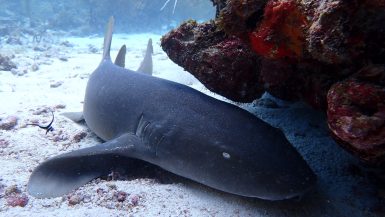 Shark and apex predator surveys: The global plight of sharks has been well documented, every year more and more species are placed on the IUCN Red List. Now, more than ever it is important that we learn more about migratory patterns, habitat selection and feeding habits. Sightings of both Tiger and Hammerhead sharks by fisher folk in our waters warrant further investigation. Since 2021, we’ve used baited remote underwater video surveillance (BRUVS) to identify, record and monitor sharks on our outer reefs. In collaboration with our partners, this data will be used to provide important information to aid in the protection of these beautiful and misunderstood animals. As a volunteer on this project, safety is our paramount concern. You will learn about the construction and deployment of BRUVS systems as well as the recovery of camera equipment too.
New projects
Macroinvertebrate surveys & Underwater Photography
Nudibranchs by virtue of their size are often overlooked. Join Ashley and Nora in their research and learn all about these elusive tiny critters and gather data on their presence on our reefs. This study has never been conducted in the region; identifying new, never seen before species is a very real possibility! During this project, you’ll also get hands-on experience taking photos and learn essential skills to improve your underwater photography.