
About the Sea Turtle Volunteer Project
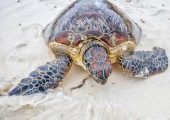
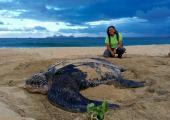
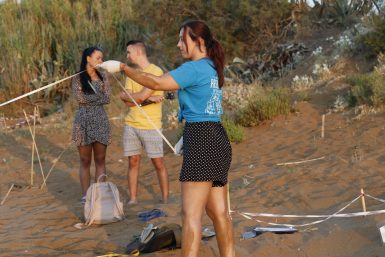 Every year, sea turtles migrate to Kefalonia to forage and reproduce. Female turtles lay their eggs on the sandy beaches of the island. Human and natural threats continue to damage and destroy many eggs. Turtles themselves are often injured or killed. This is because of accidental boat strikes, entrapment in fishing gear, or the swallowing of plastics.
Our goal is to study and protect these endangered sea turtles and their ecosystems. To do this, we survey all nesting beaches to identify, study, and safeguard the turtles’ nests. We also monitor the population’s health and behaviour. Finally, we identify threats so that we can take conservation action.
Volunteer Fieldwork Activities
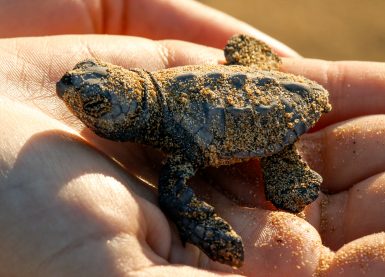 As a sea turtle conservation volunteer in Greece, you will take part in the following activities:
- Survey teams cycle to the beaches in the early morning to look for fresh turtle nests. These are then marked, measured, and protected against damage. We also track their incubation progress.
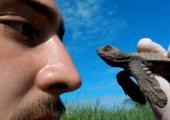
- When the young turtles hatch, volunteers help protect them from light pollution. They also ensure they can safely crawl to the sea.
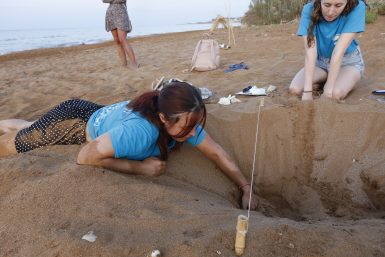
- After all healthy hatchlings have left the nests, volunteers conduct inventories. This is to assess the fate of every egg and the hatching success of each nest.
Light pollution and storms are two primary threats to sea turtle nests in Kefalonia. Therefore, an important part of your conservation fieldwork is the environmental studies used to quantify light pollution and determine its source. Volunteers also measure the continuous changes of the nesting beaches and the distance of the water from nests. With this data, our team will be able to assess the risk to each nest and take timely action to prevent any harm.
Sea Turtle Project Locations
Sea turtles nest along the entire south coast of Kefalonia. In general, from May to July is nesting season (when female turtles are laying eggs on the beaches), and from August to October is hatching season (when the eggs hatch and baby turtles head to the sea). To cover this extensive area, we operate our conservation volunteer projects at two separate locations; Lixouri and Argostoli. There are a few differences between the activities in these two locations:
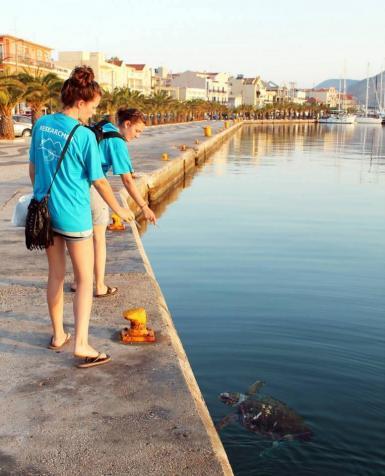
In Argostoli, there are no night surveys. Turtles are observed regularly in the harbour from June to October. From August onwards, volunteers are involved in hatchling rescue/beach sleepouts/morning surveys through to October.
In Lixouri, night patrols take place from June to July. The patrols include spotting, measuring and tagging the nesting female turtles. There is no adult turtle observation in Lixouri. From August onwards, volunteers are involved in hatchling rescue/beach sleepouts/morning surveys through to September.
All other activities and experiences for the sea turtle volunteer projects are the same for both locations.
More details by month
During April and mid-May (Mating Season) volunteers will focus their research efforts on the Argostoli harbour fieldwork which will include sea turtle mating observations, observing photo identification techniques and drone use in conservation with population studies. We will also be monitoring other foraging grounds with drone surveys. On the nesting beaches, we will be conducting beach profile studies, and performing beach cleans and plastic pollution assessments in preparation for the nesting season.
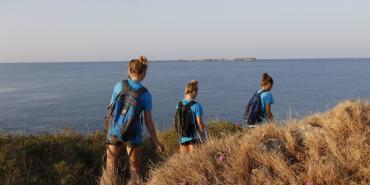 Mid-May through late July (Nesting Season) volunteers will divide their time between monitoring the harbour sea turtles and nesting beach surveys. Monitoring efforts in the harbour will include recording behavioural observations and observing the anthropogenic influence on sea turtles in the area. A small number of sea turtles have been observed in the Lixouri harbour so some surveys will be conducted there by the Lixouri Field Station. We will begin walking the beaches in Mid-may in anticipation for our first nest. The nesting season will continue through the first week in August. During this time we cycle to the nesting beaches and walk them very early in the morning to ensure all nests are protected. In the Lixouri Field Station only, we will walk the beach throughout the night and tag females after they’ve nested. At both Field Stations, nests laid too close to sea or are at risk will be relocated. Beach profile studies, beach cleans and plastic pollution assessment are continued through the remainder of the season.
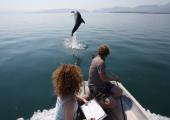
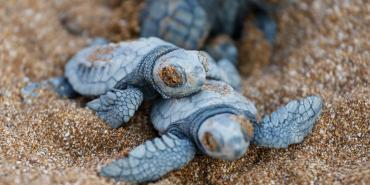 During late July and through late October (Hatching season), nests are monitored daily for hatching events and protected from threats such as storm events or beach use activities (volleyball tournaments etc.). Nests deemed at risk from light pollution will be protected by teams who sleep next to the nests (without tents) throughout the night. Each nest is checked periodically throughout the night and all hatchlings are released in a dark more natural location on the beach. After all healthy hatchlings have left the nests, we conduct nest inventories to assess the hatching success of each nest. Any trapped hatchlings in the inventoried nests are released to crawl safely to sea! In late September and October, volunteers will have more time to participate in drone surveys of the harbour and other foraging grounds where they will count sea turtles in the study of the population. During these surveys, it is not uncommon to observe injured sea turtles and initiate a rescue operation.
About the Kefalonia Coastal Conservation Programme
As sea turtles are part of both coastal and marine ecosystems, we have now broadened our research to encompass the study of the protected Posidonia oceanica seagrass meadows and the sand dune systems, categorised as vulnerable on the Red List. In addition to these ecosystems being important for the nesting and foraging of endangered sea turtles, they are important biomarkers for climate change, and so much more.
The programme studies the Posidonia oceanica seagrass meadows and the sand dunes along southeast Kefalonia. Seagrass meadows are a larger carbon sink than the rainforest and play a critical role in mitigating climate change. They form an important ecosystem, providing habitats and nursery grounds for many marine animals as well as other organisms. Sand dunes and their vegetation form a dynamic barrier between sea and land and a specialised ecosystem that is impacted by development and accelerated erosion. Volunteers are located at 2 sites – Skala and Svoronata.
Volunteer Fieldwork Activities
As a marine and coastal conservation volunteer in Greece, you will take part in the following activities:
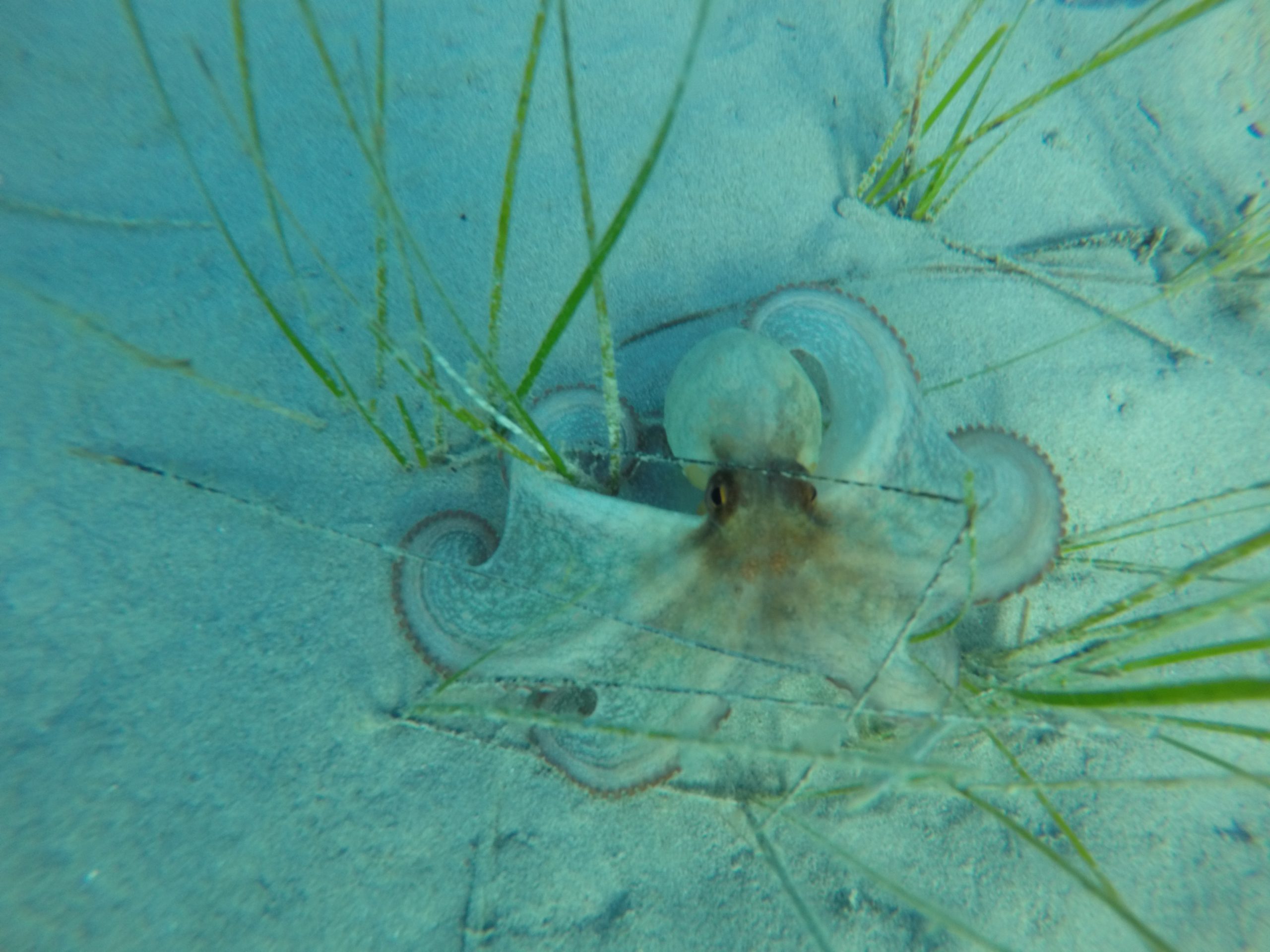 Snorkel surveying the Posidonia seagrass meadows to collect geotagged photographs
- Surveying the extensive dune systems, via beach profile and species identification surveys
- Drone surveys and reviewing the footage once the flight is complete
- Creating topographies and three-dimensional maps of the dunes
- Working to keep the beaches of Kefalonia free from trash and debris – Microplastic research
- Coastal bird surveys – only at Svoronata site
Family Volunteering
Family volunteering at our Sea Turtle Conservation Programme in Greece is very popular with families. Children from 7 yrs upwards with parents are most welcome to join. We offer a one week (6 day) programme which includes turtle nesting beach surveys (early morning starts), harbour surveys of the turtle population, a night turtle nest monitoring shift, snorkelling surveys of sea grass meadows and a coastal clean-up. These activities will be alongside interesting and interactive presentations throughout the week as well. Any further questions, please contact us at info@workingabroad.com for a detailed itinerary, dates and costs or visit our Family sea turtle in Greece page.
Independent research projects and internships for university students
It is also possible across both programmes for volunteers to:
 Receive internship or placement credits.
- Conduct an independent research project.
- Gain work experience or community service hours.
You will receive a volunteering certificate at the end of your stay, but for any of the above programmes you will need additional preparation. This includes extra reading and work during the project and at home. The number of internship spots is limited. Deadlines, requirements and a minimum volunteering period of four weeks apply. If interested, please email us well in advance.