
 Useful Information about Iceland
Iceland is a country filled with legend, sagas, rich history and folkore, and its wild landscape contains mist-filled volcanoes, glaciers, geysers, hot springs, dramatic valleys and waterfalls everywhere you look. The first impression when you come to Iceland is that you are stepping into an unknown landscape, not unlike that of the Moon! The winters provide a spectacle of the Aurora Borealis and in the summers, the sun never goes down and shines at midnight.
Heidmörk Nature Reserve
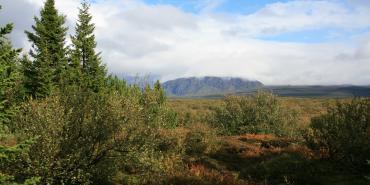
Heidmörk is the largest outdoor recreation area in the capital area and one of the most popular. There are dozens of kilometers of trails around Heidmörk.
Vegetation
The vegetation in Heidmörk is quite diverse and includes about one hundred different types of trees and shrubs that have been planted in Heidmörk over the years. Trees includes birch, conifer forests and mixed forests. There are also lava fields, grassland and lupine meadows.
Lupine was first planted in Heidmörk in 1959. In the following years and decades, lupine spread widely on sparsely vegetated fields in Heidmörk and on the low heaths north of Heidmörk. 57 species of mosses were found in three places in Heiðmörk during a study by the Natural Science Institute in 2005. Two rare plant species were also found: Eggjatvíblaðka, which is protected and on the selection list, and bakkaarfi, which was then found for the first time in Iceland.
 Bird life
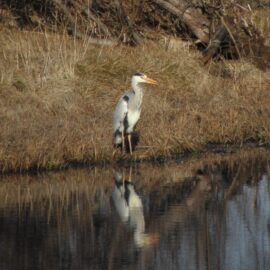
There is a variety of birdlife in Heidmörk, including many rare species and species that are on the selection list, such as barn owls, gar ducks and white-tailed godwits, as well as visitors including sea eagles and mallards to foreign vagrants, including gray herons and tree swallows.
In winter there are quite a lot of ptarmigan. New arrivals, like gannets, nest in Heidmörk. Over the past few years, birdwatching has been held in Heiðmörk several times, in collaboration with the Reykjavík Forestry Association and the Wildlife Conservation Society.
A study of bird life in Heidmörk in 2009 revealed that the density of birds was highest in coniferous forest and lupine. The most common nesting birds were the wagtail, the tufted tit, the woodpecker and the common tit. A total of 2,600 pairs of these species laid their eggs. In addition, several forest birds were starting to establish themselves in Heidmörk.
Mammals and fish
In Heiðmörk there is a fairly diverse range of mammals, at least by Icelandic standards. There are mice, rabbits, wild cats, foxes and minks. Dogs and horses then make their way to Heidmörk, accompanied by men. All five types of freshwater fish known in Iceland are found in Elliðavatn – salmon, char, trout, anglerfish and eel.
Geology
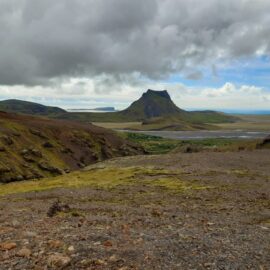
Geologically, there are two main characteristics of Heidmörk: faults and cracks in the bedrock and also hand lava. In Heidmörk there are beautiful and interesting geological formations such as Mariúhella and the lava sequence Búrfellsgjá. However, the best-known geological formations in the area are without a doubt Rauðhólar – artificial craters that were created in steam explosions about 4,700 years ago, when Leitalava flowed over the wetlands of the Elliðavatn area.