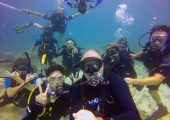

About the Blue Lagoon Project
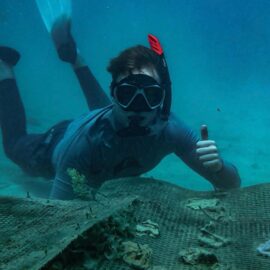 The Blue Lagoon Project in Mauiritus focuses on environmental protection, ecosystem restoration, and community development. Volunteers and interns can support with a range of projects, including marine ecosystem conservation, agroecology and advocacy for nature. You will contribute meaningfully to preserving Mauritius’s natural beauty and environmental resilience.
Volunteers can get involved with a few different programmes, which you can see in detail further below. The project aims to:
- Help restore vital coral reef ecosystems, preserving marine biodiversity, and supporting coastal communities.
- Promote sustainable agriculture, contributing to food security, climate change mitigation, and biodiversity conservation.
- Advance the recognition of nature’s rights, safeguarding ecosystems for future generations.
Marine Ecosystem Monitoring and Restoration project
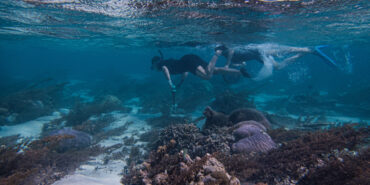 This project aims to protect, preserve, and restore the marine and coastal environments of Blue Bay Marine Park and in the Pointe d’Esny regions of Mauritius. As a biodiversity hotspot in the Indian Ocean, the island’s southeastern coast plays a vital role in ocean conservation.
Many of the activities are weather and sea condition dependent. The range of projects that volunteers may be involved with are listed below:
- Community-Based Coral Farming: Establish coral nurseries in the lagoon, restore native coral species, and monitor coral growth and resilience in response to climate change.
- Mangrove, Seagrass, Coral, and Fish Monitoring: Use methods like line intersect transect and quadrat sampling to collect data on key species, helping to protect these essential habitats.
- Beach and Mangrove Clean-ups: Conduct clean-ups and monitor plastic pollution, helping to maintain the health of coastal ecosystems.
- Turtle Monitoring: Observe green and hawksbill turtles, track individual movements, and assess human and environmental impacts on their populations through photo-identification.
Agroecology – Resilient Organic Community project
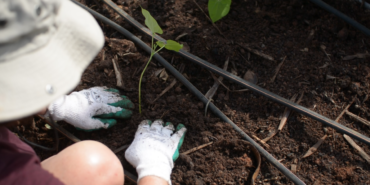 Help build a resilient food system and support local communities in the south-east region of Mauritius. The project focuses on sustainable agriculture and food security through hands-on agroecological practices. We want to foster a community that respects individuals, the land, plants, and all forms of life. We are committed to sustainable and regenerative agricultural practices, and reconnecting individuals with nature through informed food choices and locally adapted food.
Volunteers wiill help with:
- Agroecology practices: Assist with organic farming, composting, and agroecology to support healthy ecosystems and promote sustainable food production.
- Community engagement and education: Participate in workshops and outreach activities to support local farmers and promote agroforestry and agroecology.
Advocacy and Communication for the Rights of Nature
This project supports communication, outreach, and advocacy for nature’s rights, raising awareness about pressing environmental issues in Mauritius. Volunteers will be involved with:
- Content creation: Produce educational materials, articles, and visuals to promote nature’s rights and conservation.
- Social media campaigns: Support social media outreach on platforms like Facebook and Instagram, focusing on sustainable development and environmental protection.
- Event coordination: Help organize community events, workshops, and campaigns that engage the public and promote environmental stewardship
What skills and experience will volunteers gain?
Volunteers can enhance their marine-based knowledge, community engagemeent skills and more. Various training will be given through different theoretical and practical workshops.
- Provide volunteers with a sound understanding of marine ecosystems
- Enable volunteers to identify various coral, fish and benthic species distributed around the oceans of Mauritius.
- Investigate current anthropogenic issues that impact the ecosystem of coral reefs both globally and within the local area of Blue Bay and Mauritius.
Long-term internship positions
Internships are available for those with relevant skills and experience. Interns must be available for a fixed period of 3 months. You can find the description of the different internship opportunities below.
Marine Conservation
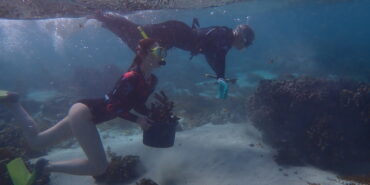 Many of the tasks and duties of this internship are related to the above marine conversation project. Therefore, if you have the required skills and experience (see bottom of page), consider applying for a long-term internship. You must have knowledge in marine biology, conservation, environmental science, or a related field.
Tasks can include:
- Leading a team of volunteers doing marine conservation tasks
- Monitoring levels of illegal fishing activity in the region.
- Recording data and writing progress reports.
- Maintaining the coral nursery, doing repairs where needed.
- Collection of data (water parameters, size of coral fragments, and so on).
- Doing sea turtle surveys within the Blue Bay Marine Park.
- Recording behaviours and doing photo IDs of turtles residing in the bay.
- And more!
Volunteer Coordination
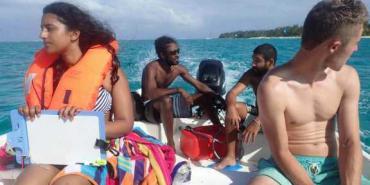
You will help coordinate the groups of volunteers that join the Blue Lagoon and Coral Reef monitoring programme for short term periods all throughout the year. Tasks include:
- Managing, preparing, welcoming, and following up with volunteers.
- Tracking and documenting the projects in which volunteers participate.
- Collaborating closely with the scientific team when needed.
- Engaging in the association’s activities, including awareness-raising and assisting in organising events.
- Supporting communication efforts for the organisation.
Overall, you are responsible for managing and taking care of the volunteers on the project. You make sure they do their tasks, facilitate them and show them what they can do to help the project reach its goals.
Communication and Advocacy
You will collaborate closely with our team to develop effective communication strategies, create engaging content for various projects, and support advocacy efforts. Tasks include:
- Support the communications strategy to enhance outreach and engagement.
- Write and publish content for the website and social media platforms (Facebook, Instagram, LinkedIn).
- Fundraising communications to attract support for our initiatives.
- Create articles, visuals, infographics, and communication tools for campaigns and projects.
- Run communication and mobilization campaigns to raise awareness and encourage participation.
- Write and distribute newsletters and reports to keep stakeholders informed.
- Assist in organising events and mobilisations (external/internal events, training sessions, and community meetings).
- Monitor key performance indicators (KPIs) and report on campaign outcomes.
Agroecology
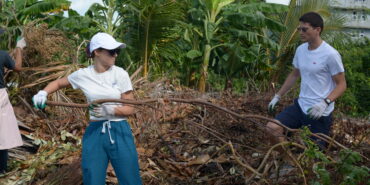 You will contribute to ecological farming practices, gaining hands-on experience with our agroecological projects. Having some knowledge or background in agriculture, environmental science, or a related field is not mandatory, but good to have. You should have an interest in agroecology, sustainable food systems, and ecological conservation.
Main tasks and responsibilities are:
- Support implementation of agroecological practices (organic farming, permaculture, and soil conservation).
- Participate in crop cultivation and maintenance (planting, watering, weeding, and harvesting).
- Assist with composting, seed saving, and natural pest control.
- Monitor soil health and biodiversity by collecting and analysing data.
- Engage with local farmers and communities to promote sustainable agriculture through workshops and events.
- Help develop educational materials on agroecology and environmental stewardship.
- Contribute to communication efforts by documenting activities and creating reports.
Required skills and qualifications for internship positions
Each internship can have different skills requirements, depending on the tasks. The ones below are some of the general skills that are required by most interns.
- A strong commitment to marine conservation and a genuine desire to make a positive impact.
- Proficiency with basic software like Microsoft Office and Google Docs.
- A good understanding of marine ecosystems, the threats they face, and emerging conservation techniques.
- Must have strong swimming skills (else you will only be able to do office work).
- Ability to assist in fieldwork, including surveys, sample collection, and marine life monitoring.
- Ability to collaborate with other team members and be willing to share ideas and resources.
- Should be in good physical condition, as some tasks may require physical endurance (long hours on boat or snorkeling).
- The intern must have knowledge in marine biology, conservation, environmental science, or a related field (for relevant internships).
- Ability to perform physical tasks outdoors, sometimes under varying weather conditions.
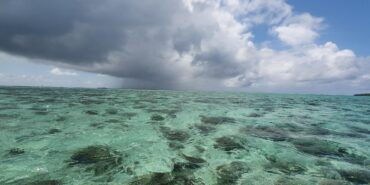 This is a part of an NGO and non-profit organisation. For that reason, interns do not receive a monthly salary or allowance. Interns have to provide (but can be assisted in finding) their own accommodation and transport and will have to pay their own food and living costs.
There is a one-off £250 application fee for any intern that is accepted on the programme. As an idea, renting a room for an intern can cost £300 to £400 per month per person.
Family Volunteering
We do accept families on this programme, so long as the children are over 12 yrs old and are good swimmers. Parents will need to sign a waiver of release and take full responsibility for their child whilst on the programme.