




 Useful things to consider when applying
Working at a Wildlife Rehabilitation Centre can be very intense at times because of the hours we sometimes have to keep. With any luck, you will be working an eight hour day, but at times it can be up to 12 hours, depending on the number of admissions and their problems. Sometimes there can even be a 2 a.m. feeding. Interns will be expected to be involved in all aspects of the shelter. Your job will include feeding, food preparation, cleaning, laundry, administering treatment, participating in building projects, painting, etc.
Internships typically last eight weeks or more, depending on the scheduling. Because you will be raising your own babies as well as helping with the others, you need to commit to eight weeks or more depending on what you want to raise. With baby mammals it is important to get them weaned before being passed on to someone else. Once you have your own babies you will want to get them weaned and most interns stay longer so they can see them released.
Please note that when applying, priority will be given to applicants who can stay longer so that the animals raised are weaned before their care giver leaves.
 General Expectations:
Interning at this Wildlife Rescue centre involves being on your feet for hours at a time, repetitive work, physical labour like lifting heavy objects (over 50 lbs.), and outdoor work during all types of weather (painting, scrubbing etc.) – are you willing and able to preform these types of duties? Please note: this is not a 9-5 experience!
We want your stay as an intern to be helpful to both yourself and to us we hope this list will give you realistic expectations for your stay.
- The animals come first. No exceptions. Their care and well-being must be your top priority during your stay.
- We guarantee that your time with us will be one of both tremendous rewards and difficult times. Particularly during baby season, you can be sure that it will be physically, emotionally and in every way exhausting! However, there is no better feeling than seeing your babies grow up strong and healthy or being witness to the release of an animal that you have spent weeks helping to regain its strength. Keep this in mind during the difficult times!
 As an intern, you do not have official hours of work. Although ideally you will end work when the centre closes for the day, you are expected to continue working until the work is done. During baby season, this may often mean working past 10 or 11pm in the evening. This can amount to very long days and many hours of work! During baby season, you may be doing feeds throughout the night. You may also be finishing your last feed after 12am and getting up at 6 or 7am for your first feed.
- There are certain difficult realities to wildlife rehabilitation that everyone must be prepared to deal with. These include deaths and euthanizing animals. Sometimes despite your best efforts an animal will not make it, and this can be difficult to deal with.
- Although we encourage people to nurture the animals in our care, there is a fine line between nurturing and playing with. Mammals are easily imprinted and an animal that has no fear of people will not survive in the wild. Our animals will be released eventually and, particularly when release time is approaching, it is important to remember that you must interact with them as little as possible. They must learn to depend on each other and not their human caregivers. We do not allow people to play with the animals.
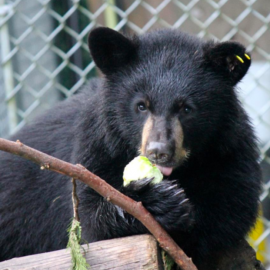
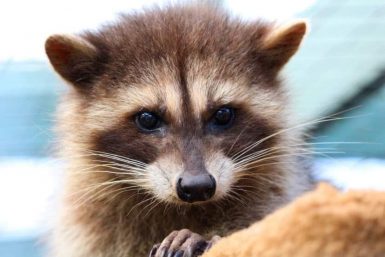
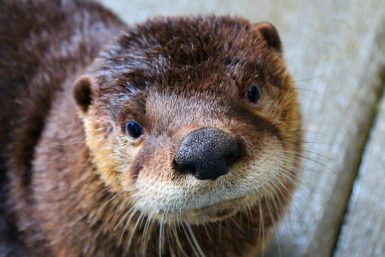 It is not guaranteed that you will get to work with (or visit/observe) every animal in our care. Although some species are open for everyone to work with (Raccoons, Skunks, Squirrels, etc.) other species are particularly susceptible to imprinting and, in order to give them the best chance for a successful release, these will remain off-limits to the majority of people. These include the Bears, Beavers, Otters, Coyotes and Fawns. As an intern you may be assigned to one of these species during your stay. Otherwise, you may only get to see these animals as they are admitted.
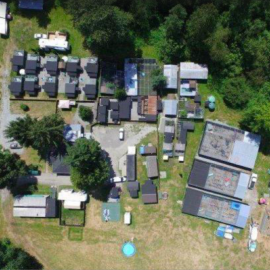
- There is a lot of work that goes into the running of a wildlife rehabilitation centre, and not all of it will be glamorous, or even directly working with the animals. A large part of your work will be cleaning – cleaning animal pens, cages, incubators, and toys, but also cleaning and maintaining the centre itself and its property. The centre is known for its very high standards of cleanliness and animal care, and as an intern you are expected to help us maintain these standards.
About British Columbia
British Columbia, is Canada’s westernmost province. It is defined by its Pacific coastline and mountains, having ten mountain ranges that push west from the Rockies until they fall into the Pacific. There are thousand-year-old tree forests and glacier-fed streams that pour through steep valleys to join swollen rivers. Areas like Glacier National Park offer hiking and biking trails, as well as campgrounds. It also homes the Whistler Blackcomb ski resort which played a part in hosting the 2010 Winter Olympics.
The project sits within the Campbell Valley Regional Park which has a sprawling network of trails for walking, horseback riding and exploring. Birdwatching, picnicking, and dog walking are also popular in the park.
Although you should consider the type of weather usual in Vancouver during the period of your stay, you should also be aware when packing your clothing that our weather can change rapidly, and while one summer is hot and dry, others have been cool and wet, so be prepared for all possibilities.