
Useful Information about Seychelles
 The Seychelles has 115 granite and coral islands that lie between 480km and 1,600km from the east coast of Africa in the Indian Ocean. Of these 115 islands, 41 of the Inner Islands constitute the oldest mid-oceanic granite islands on earth, while a further 74 form the five groups of low-lying coral atolls and reef islets that are the Outer Islands. Approximately 90,000 people live in the Seychelles, which has three official languages: Creole, English and French.
The weather usually never reaches the extremes of heat or cold. The temperature rarely drops below 24°C or rises above 32°C. A larger amount of the annual rainfall falls during the months of December to February compared to other months. The weather is hottest from December to April, where the humidity is also high. The months of May to October bring drier, cooler weather, and livelier seas.
Seychelles is one of the world’s few frontiers that offers its visitors breathtaking natural beauty in pristine surroundings still untouched by people. Seychelles is a living museum of natural history and a sanctuary for some of the rarest species of flora and fauna on earth. Seychelles is home to two UNESCO World Heritage Sites – Aldabra, the world’s largest raised coral atoll and Praslin’s Vallée de Mai, once believed to be the original site of the Garden of Eden.
North Island
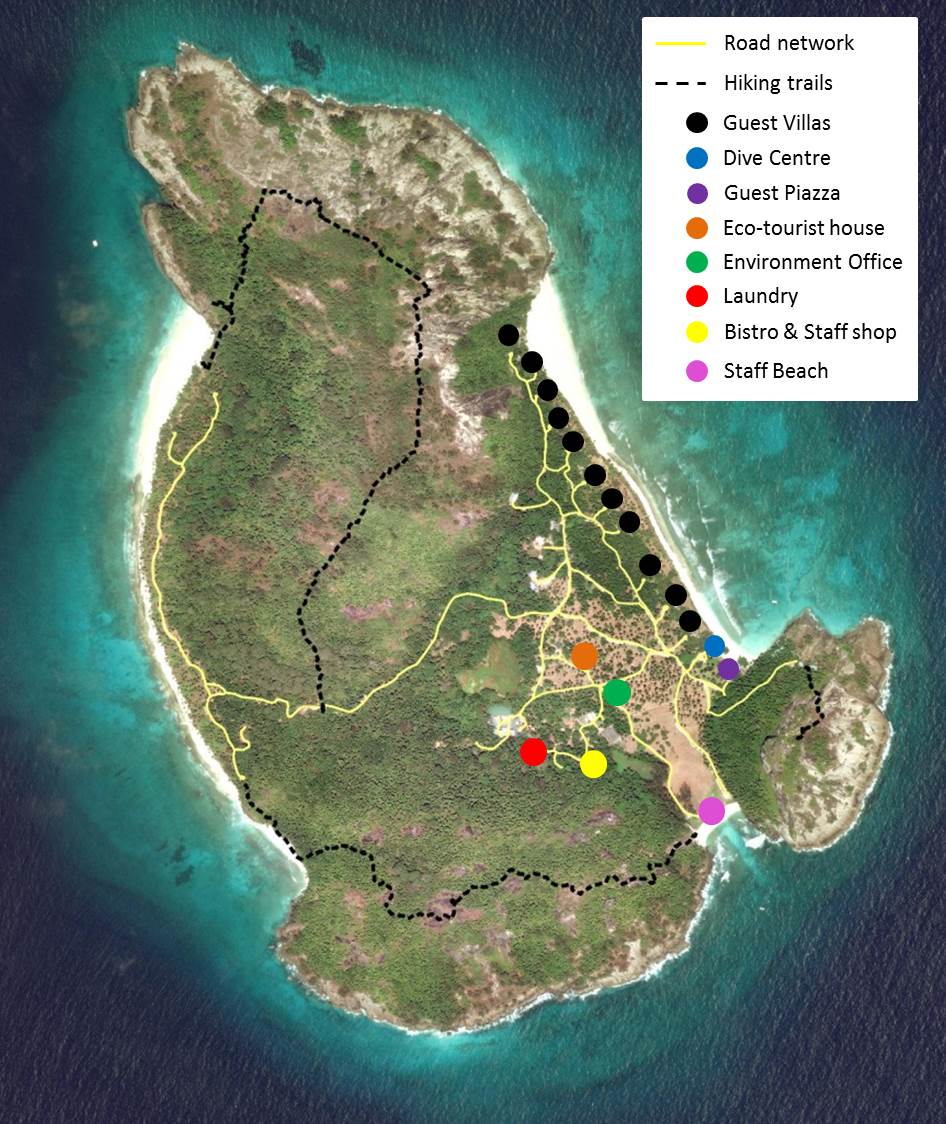
North Island in the Seychelles is a tropical island paradise – a rare sanctuary for those seeking island and marine conservation activities on a gorgeous, unspoiled tropical haven. More importantly, it is a Noah’s Ark: a sanctuary where natural habitats are being rehabilitated and where critically endangered Seychelles fauna and flora are being reintroduced and given a place to regenerate. North island as a whole comprises one of the most ambitious conservation projects ever undertaken by a private company. It is very seldom that the opportunity arises to make such a significant and positive impact on a region, a specific area, its wildlife and surrounding environment. Some of the world’s rarest wildlife species are found only on the remote archipelago in the Indian Ocean – the Seychelles.
You can find more info on the Seychelles, history and cultural sights on our country page here