




Volunteer as a Family in Costa Rica – Sea Turtles & Ecology
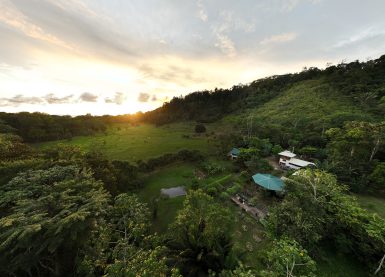
Our Deep Ecology & Sea Turtle Family Project is based on an agroecological farm community in Drake Bay, Costa Rica. Families learn how to live sustainably while protecting nature.
Get involved in organic food production, regenerative farming, ecological construction, and sea turtle conservation (July to January). Families can also enjoy free yoga and Spanish classes.
Highlights of Family Volunteering
- Live in your own private Jungle Bungalow, Jungle Cabin or Jungle Studio with hot showers/private bathroom and your own private decking with hammocks.
- Engage in sea turtle conservation activities, organic farming, and sustainable living practices.
- Participate in free yoga and Spanish lessons.
- Explore the pristine wilderness of the Osa Peninsula and Corcovado National Park.
Location
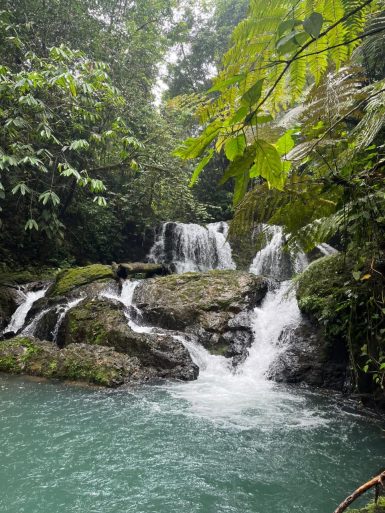
The project is located in a paradise corner of Drake Bay, surrounded by primary forest, waterfalls, mangroves, and sea turtle nesting beaches. The area is home to more than 500 species of trees, 150 species of mammals, 400 species of birds, and 150 amphibians and reptiles. It’s easy to spot humpback whales, dolphins, sea turtles, sharks, and rays in the sea.
Family Volunteer Activities
 Sea Turtle Conservation (July to January)
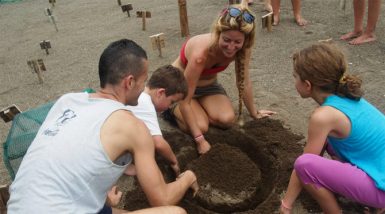
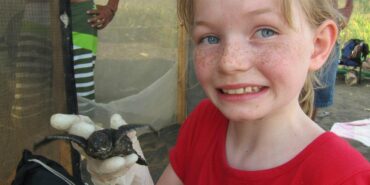
Families can participate in our community-based sea turtle conservation activities, including night patrols, beach cleaning, relocating nests, and releasing baby turtles. Families will go on night patrols 2 times a week from July onwards looking for adult nesting turtles and by mid/late September, baby turtles start to hatch and can be released. This runs into the first 2 weeks of January and then turtle season closes for the season.
Regenerative Farming
Families and children can engage in sustainable farming activities, including seed collection, transplanting, composting, and harvesting organic food, as well as learning about permaculture and ecological construction, and contribute to creating sustainable farming systems.
Forest Protection and Re-Wilding
Families can also help to protect the Punta Ganadito forest reserve by maintaining trails, planting native trees, and monitoring biodiversity and doing forest/ecological biodiversity studies. Here kids can get active trying to spot and learn about the different bird/butterfly and wildlife species.
 Free Time for Families
- Yoga Classes – Participate in free yoga classes on-site.
- Spanish Lessons – Improve your language skills with free Spanish lessons.
- Explore Corcovado National Park – Take tours to the unmissable Corcovado National Park.
- Snorkelling and Diving – Enjoy snorkelling and diving at the Caño Island marine reserve.
- Local Tours – Engage in local rural tours such as waterfall visits, night tours, birding, and horseback riding.
When is the Best Time to Come?
Families are welcome year-round for regenerative farming, forest protection, and re-wilding. Sea turtle conservation occurs from July to January, with adult turtles nesting from July to October and baby turtles hatching from September to January.
Sea Turtle Season Month-by-Month
July and August
- Prepare the hatchery, start night patrols, and conduct beach cleaning and construction activities.
- Morning patrols until nests are found, then night patrols begin in mid-July.
- Hot, humid, and sunny with frequent short downpours.
September and October
- Peak nesting season and rainy season.
- Heavy rain; work is mostly at night with downtime during the day.
- Morning patrols continue with daytime regenerative farming and biodiversity monitoring.
November to early/mid January
- Decrease in nesting females, increase in hatching babies.
- More work in the hatchery, less on the beach; night patrols finish by the end of November.
- Weather improves; peak tourist season in December with the annual sea turtle festival.