
Food, Lodging & Travel
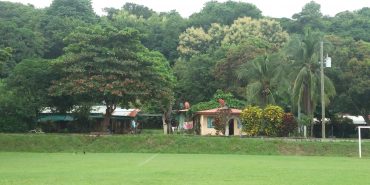
Sea turtle conservation volunteers stay in the homes of local families or in the Research Station. Volunteers are placed in the research station in the first instance, and once those are filled, you are placed in a homestay (unless you have a specific preference).
Homestay lodging – Your accommodation is within the community of Ostional, which is located right in front of the nesting beach. Typical homes in the community are small and basic (but comfortable), normally consisting of two or three bedrooms, a kitchen, living room and bathroom. Ostional village has a total population of between 400-500 people, with 110 families. The community has a preschool, an elementary school and a distance learning high school. There are small stores where you can purchase food and drinks, and there are pay phones in town that work with pre-paid phone cards.
Please note that the local families speak little or no English, so a Spanish dictionary and a little practice will be very helpful. Every effort you make to communicate with locals in Spanish will be greatly appreciated by your hosts. Costa Rican people are incredibly warm, friendly and generous. Your host family will prepare the food. Please let us know ahead of time if you have special dietary needs.
Research station – The station is very simple but has all the necessities. The volunteer dorm building has two bedrooms. Each room has 3 bunk-beds (6 people per room), 2 toilets, 2 showers, and an air conditioner/fans. Each volunteer will be given their own keys to their dorm rooms. The deck is a common space used for dining, meetings, workshops, and general relaxing. The fridge in the kitchen is available for the volunteers to keep their personal food. The library has books in various languages and there is a take-a-book-leave-a-book system. There is a sink designated for washing clothes and shared clothes lines. A lookout tree-house is available for the volunteer’s relaxation. Wireless internet and telephone access are available at all times.
 Volunteer Requirements
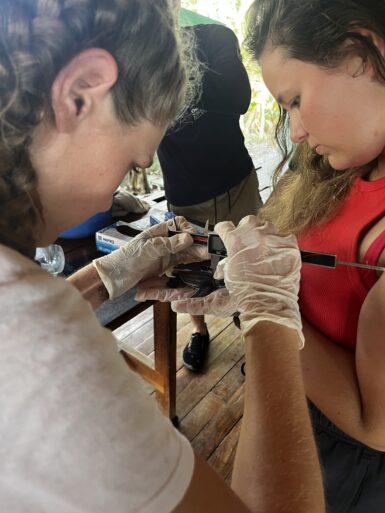
Sea turtle volunteers should be aged 18+, have an interest in biology, conservation or a related field, and be fluent in either English or Spanish. All volunteers will also need to produce a police/background check & medical letter before joining the programme (as required by the Costa Rican Ministry for the Environment for volunteers working in national parks and protected areas).
You should have a positive attitude and willingness to communicate with the local community. Volunteers also need to be physically fit, and able to withstand a hot, humid climate, and sleep deprivation. Volunteers will have to walk long distances (up to 12kms per night) on soft sand. Patrols take place regardless of weather conditions and there will be nights when no nesting turtles are encountered (especially early and late in the season). There may be times when volunteers are required to work during the day as well as night.
Sea turtle volunteers do not need any prior experience as full training will be provided upon arrival to the project site. We appreciate people who use their initiative, are problem solvers, look to be useful in their spare time, and are interested in getting to know the community, understanding what community life is like, and what the community is trying to achieve without compromising their values.
For long term Research Assistant positions, we require people to have initiative, to have good leadership and problem solving skills, as well as a good mental capacity to handle and lead groups.
While sea turtle volunteering of this nature can at times be challenging, it is also a brilliant opportunity to step out of your comfort zone and contribute to the conservation of one of the worlds most endangered species. Working with the sea turtles is a truly unforgettable experience and this project really needs help from volunteers.
How to get there?
International flights to San José from Europe are usually either with American Airlines via Miami or with Iberia via Spain. Please remember not to look for San Jose in California, it is San José International Airport (Juan Santamaria) – code SJO.
Upon arriving in Costa Rica we recommend you stay in Alajuela at Margarita’s Guest House (close to the airport) for one or two nights, allowing you time to visit the bank and make any last minute purchases (international phone cards etc) before going to the project site.
There are two access routes to Ostional; via Santa Cruz or Nosara (both approximately seven hours by bus from San José). Most volunteers choose to take the Santa Cruz route. We can provide detailed information on how to get to the project site and on Margarita’s Guest House. You can also fly to Nosara with Sansa Air and take a 30 mins taxi to Ostional if you are short of time.