
About the Dolphin Volunteer Project
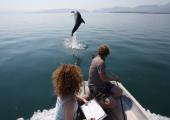
 Through fieldwork activities, education and research, this is an opportunity for volunteers to gain experience of working at sea, learn new research skills, work with experienced marine biologists, and play an important role in the conservation of marine habitats in Portugal. The field research activities are conducted on our own research vessel, ‘Ketos’, and also aboard commercial whale watching boats that work in partnership with the project. Below are some of the activities you can expect to be involved with as a marine conservation volunteer in Portugal;
- For every cetacean group we encounter, we collect a range of biological, ecological and environmental data.
- Volunteers will get to see several species of cetaceans, sharks, sea turtles and marine birds found in the South of Portugal (please note not all sightings are guaranteed due to local weather conditions)
- Learn to identify and interpret cetacean behaviour and social composition
 Increase your pool of knowledge through theoretical lectures and fieldwork training from experienced researchers
- Learn about and use several of the most frequently used techniques and methodologies to study cetaceans
- Learn about data collection, photo analysis (photo-id) and techniques in underwater and aerial videos, and more
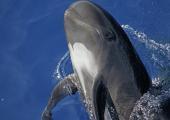
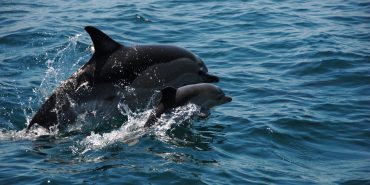
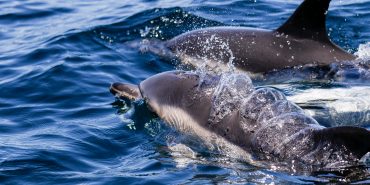
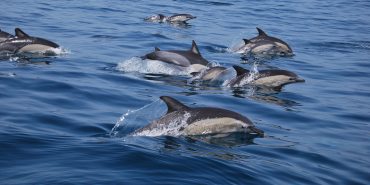
The species most frequently sighted during the field season are the short-beaked common dolphin (Delphinus delphis) and common bottlenose dolphin (Tursiops truncatus). Occasionally, we also see the harbour porpoise (Phocoena phocoena), striped dolphin (Stenella coeruleoalba), Risso’s dolphin (Grampus griseus), Orca whale (Orcinus orca), minke whale (Balaenoptera acutorostrata) and the fin whale (Balaenoptera physalus).
Project Background
 This project was established in 2010, working in the Algarve region, specifically Albufeira, Portugal, in order to study and conserve marine mammals in their natural environment. The project aims to be a reference for research, education and conservation of the environment in Portuguese waters, promoting activities and partnerships which empower our understanding of marine-related issues, identifying threats and mitigating their effects on marine wildlife. The project also works closely with local stakeholders, such as dolphin-watching companies, administration and authorities, other NGOs and public environmental institutions. Together, we conduct scientific research on environmental topics and try to promote a healthier and safer environment for marine species.